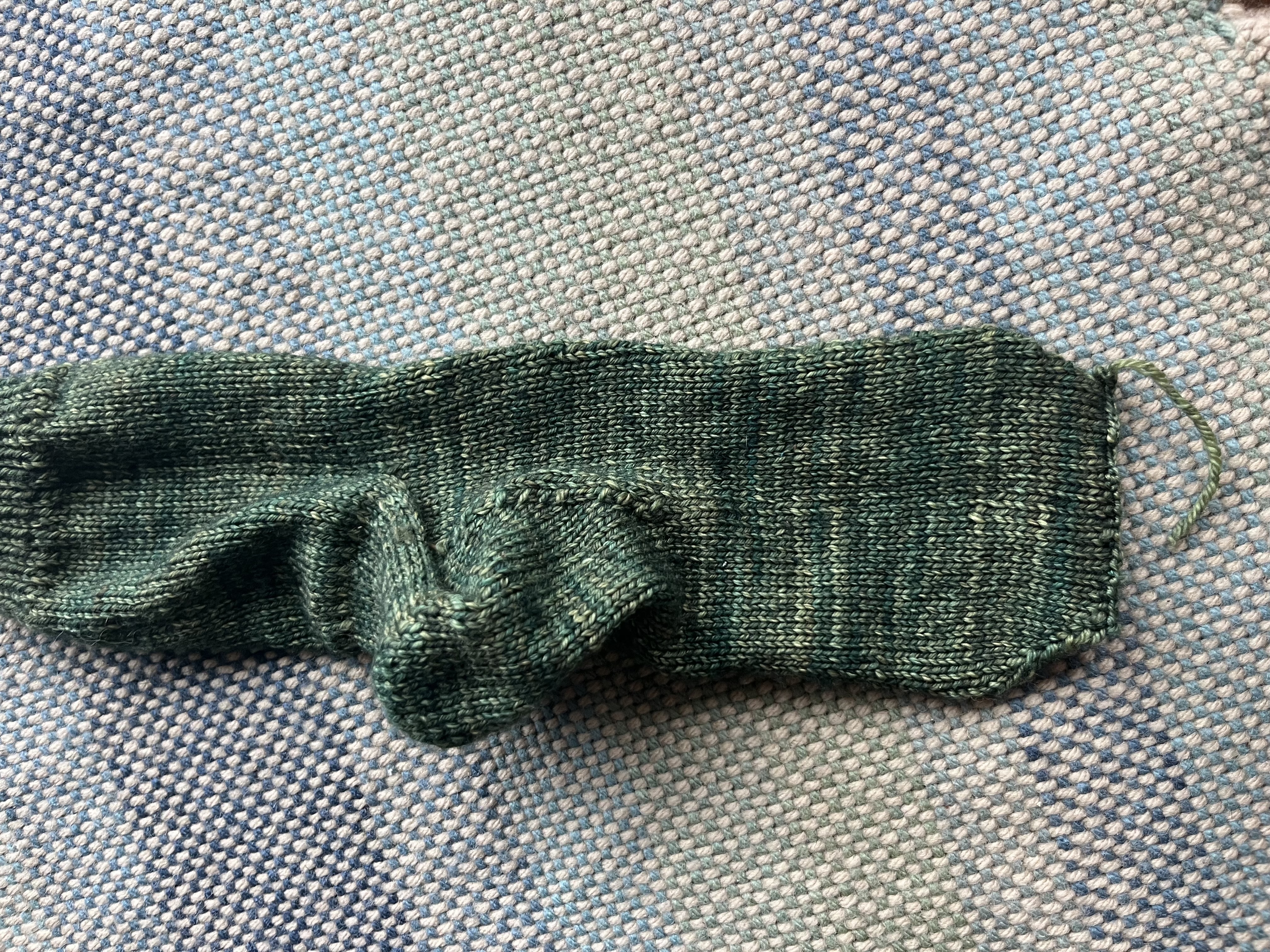
<?xml version="1.0" encoding="utf-8"?><feed xmlns="http://www.w3.org/2005/Atom" ><generator uri="https://jekyllrb.com/" version="3.10.0">Jekyll</generator><link href="https://rhiannasfiberarts.github.io/feed.xml" rel="self" type="application/atom+xml" /><link href="https://rhiannasfiberarts.github.io/" rel="alternate" type="text/html" /><updated>2026-04-20T01:26:00+00:00</updated><id>https://rhiannasfiberarts.github.io/feed.xml</id><title type="html">Rhianna’s Fiber Arts</title><subtitle>All things fiber fun</subtitle><author><name>Rhianna Lucas</name></author><entry><title type="html">Frogging</title><link href="https://rhiannasfiberarts.github.io/blog/2026/04/19/Frogging/" rel="alternate" type="text/html" title="Frogging" /><published>2026-04-19T00:00:00+00:00</published><updated>2026-04-19T00:00:00+00:00</updated><id>https://rhiannasfiberarts.github.io/blog/2026/04/19/Frogging</id><content type="html" xml:base="https://rhiannasfiberarts.github.io/blog/2026/04/19/Frogging/"><![CDATA[<p>Sometimes you are so close to the end of a project you just want to get it done. So you rush, and don’t put the time and attention to detail you should into it. And you make mistakes. Sometimes big mistakes. As in the toe of my sock is crooked mistakes, and not a little crooked, full 90 degree rotation crooked. So you do what any sane person would, and shove it out of sight for between 3 and 30 months.</p>

<p><img src="/assets/images/IMG_1913.jpeg" alt="Photo of a crooked sock made of green yarn." /></p>

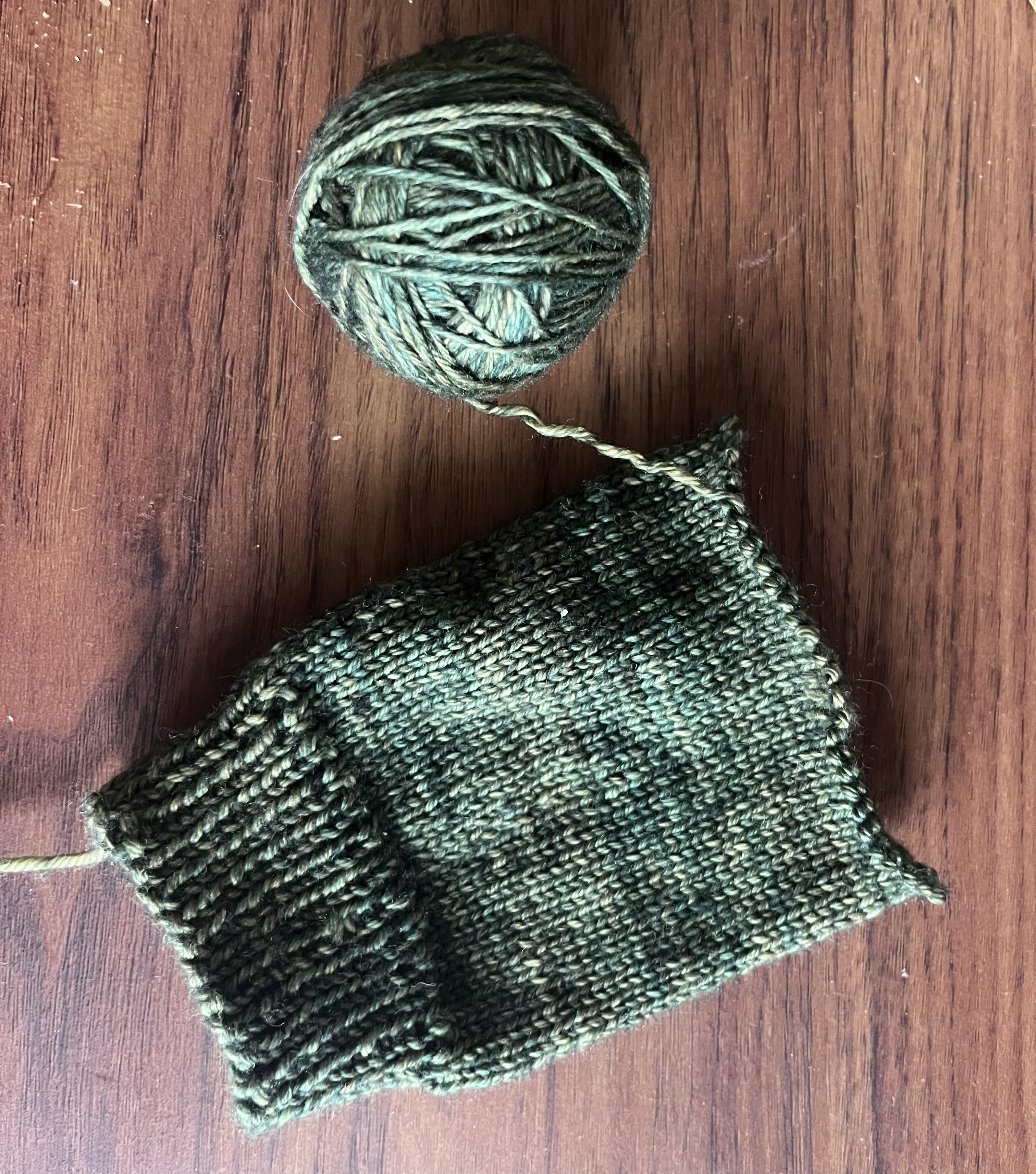
<p>Then when you are ready you bring it back out and you frog it. For any non-knitters reading this frogging is the process of undoing your knitting by grabbing the end of the yarn and pulling. You may have heard that it is called frogging because you “rip-it rip-it”, and this is a fun explanation although unlikely the true origin. Our best guess is that the term was adopted from it’s use as a curse or disparaging term for the French which was widely used in England at the time we first see it appear in reference to fiber arts. If you want to read more on the possible origins of the word <a href="https://lordlibidan.com/why-is-it-called-frogging-anyway/?srsltid=AfmBOors9YAIRpTCgRIcvS3CK0SOH0VOtRxNgw1gBpUNn9hWapFZieIo">Lord Libidan</a> has a great blog post on it. So I frogged my crooked sock, pulling and pulling all the way back to before the heel. 
<img src="/assets/images/IMG_1916.jpeg" alt="Photo of the sock unravled back to only a few inches and the yarn wound into a ball." /></p>

<p>Why didn’t I just frog the toe? I picked now to do this because I was in need of a portable project that is so simple I barely need to look as I work. I don’t want to be thinking about where to put the heel and then actually need to do the heel, so I have decided to try an afterthought heel. For an afterthought heel you knit the whole sock as a tube then come back and open it up to add the heel. If this goes well I think it will be my new favorite way to make socks! 
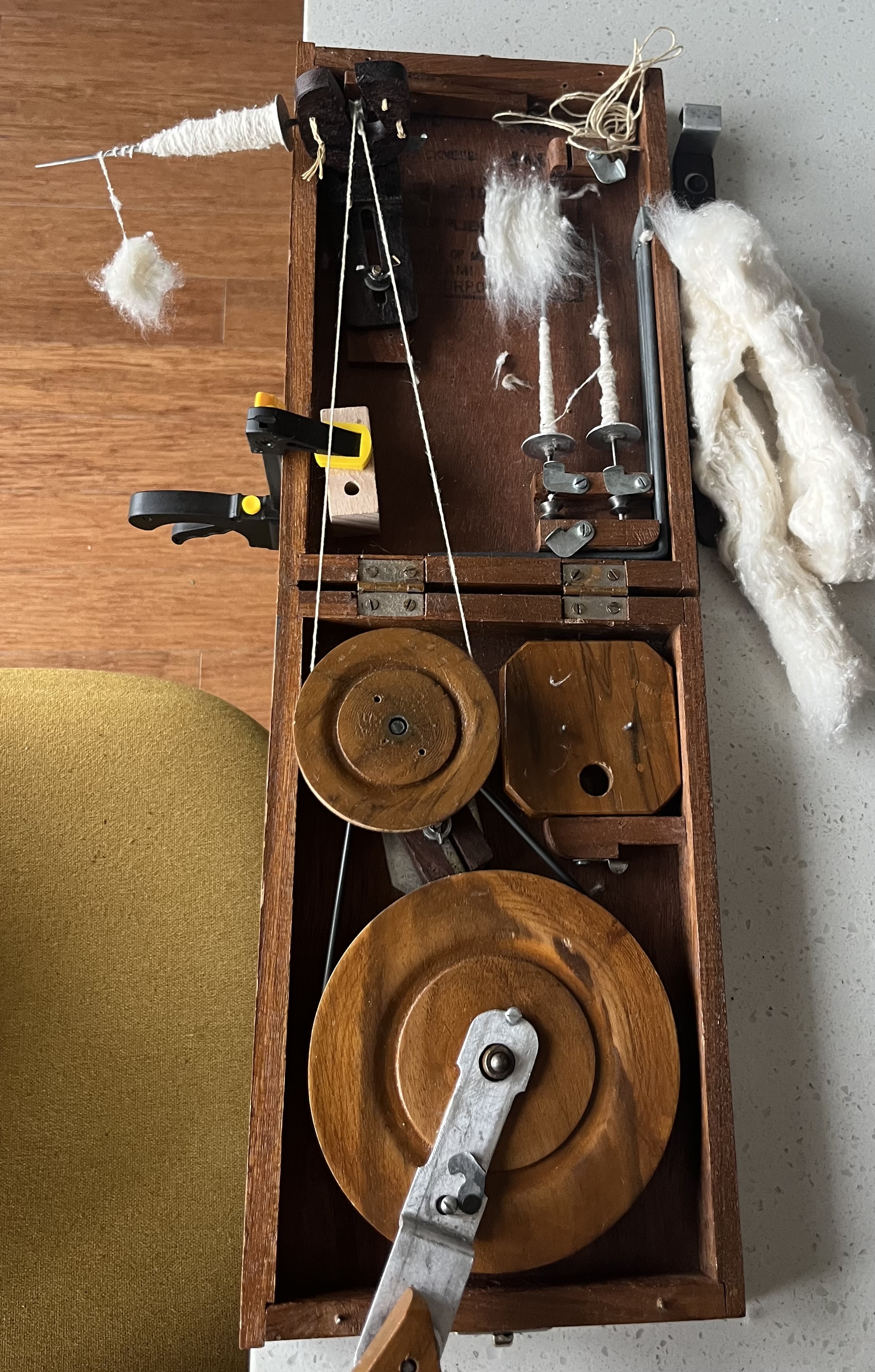
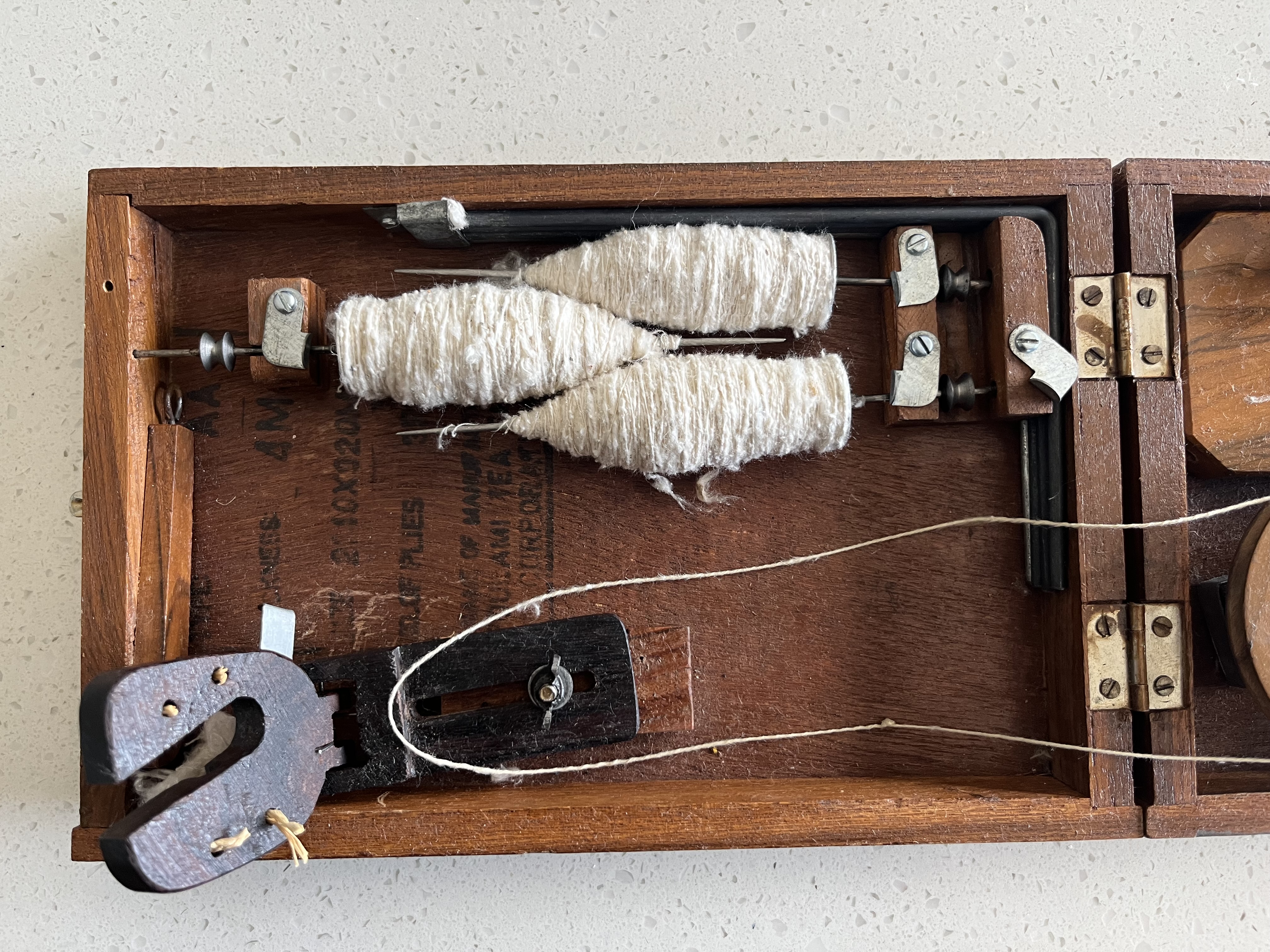
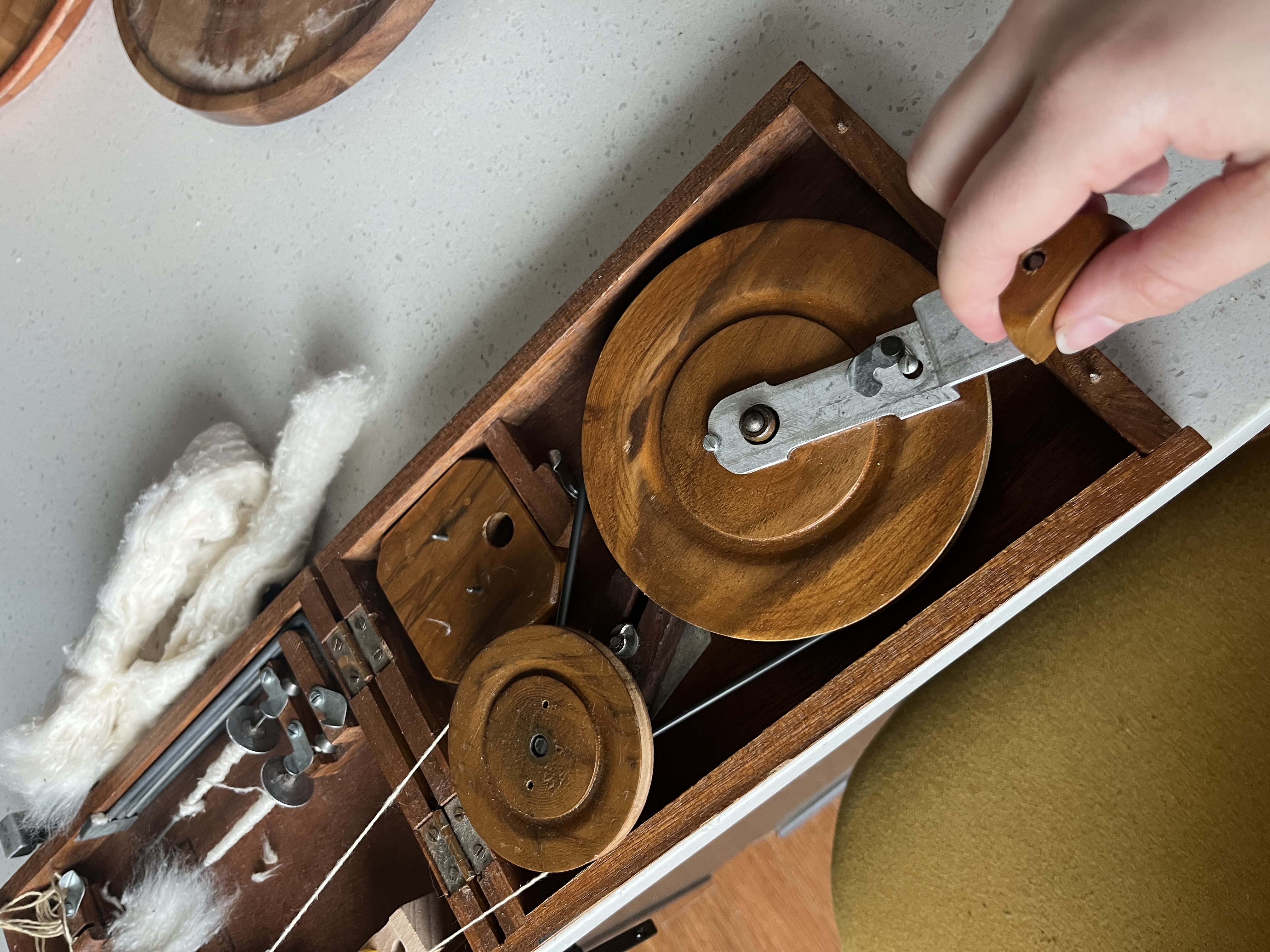
<img src="/assets/images/IMG_1913.jpeg" alt="Photo of the top of the sock now safely on knitting needles." /></p>]]></content><author><name>Rhianna Lucas</name></author><category term="knitting" /><summary type="html"><![CDATA[Sometimes you are so close to the end of a project you just want to get it done. So you rush, and don’t put the time and attention to detail you should into it. And you make mistakes. Sometimes big mistakes. As in the toe of my sock is crooked mistakes, and not a little crooked, full 90 degree rotation crooked. So you do what any sane person would, and shove it out of sight for between 3 and 30 months.]]></summary></entry><entry><title type="html">Spinning silk on a Charkha</title><link href="https://rhiannasfiberarts.github.io/blog/2026/04/14/Spinning-Silk-on-a-Charkha/" rel="alternate" type="text/html" title="Spinning silk on a Charkha" /><published>2026-04-14T00:00:00+00:00</published><updated>2026-04-14T00:00:00+00:00</updated><id>https://rhiannasfiberarts.github.io/blog/2026/04/14/Spinning-Silk-on-a-Charkha</id><content type="html" xml:base="https://rhiannasfiberarts.github.io/blog/2026/04/14/Spinning-Silk-on-a-Charkha/"><![CDATA[<p>The book charkha is in my humble opinion the most elegantly designed piece of equipment I have ever come across. When out in public spinning on it strangers frequently stop to marvel and inquire as to how it works. Starting from your right the larger wheel, which is still only five inches in diameter, is connected to a handle which is slotted on over two pins and has a loose knob to allow you to easily spin it. This larger wheel connects to the smaller one (three inches diameter) via a rubber drive band. The smaller wheel is then connected across to a spindle on the far left with a cotton string. The metal spindle sits neatly into a wooden bracket pushing against the pull of the string with a spring creating just the right tension for the spindle to spin. There are holes in the bracket to thread straw or twine through so the bracket is protected from the wear of the spindle spinning. This system creates about an 80:1 gear ratio, meaning every one circle you make with the handle will spin the tip of your spindle will spin 80 times. That is fast! The traditional European style spinning wheels typically range from a 5:1 to 20:1 ratio. Why so fast? 
<img src="/assets/images/IMG_1919.jpeg" alt="Photo of Charkha" />
The speed you spin at depends on the staple length of your fiber. Fibers with long staple lengths can be spun slower/less and fibers with short staple length need to be spun faster/more to hold together. Charkhas are made to spin cotton which has a very short staple length, hence the 80:1 ratio. Many spinners used to European style wheels are often intimidate by book charkhas, because you only have one hand for fiber management while the other hand spins the wheel. However I encourage them to try it, because with such a short staple length I find one hand is plenty to draft with. 
<img src="/assets/images/IMG_1894.jpeg" alt="Photo of Charkha" />
So this long winded explanation of the mechanics puts us all on the same page of wondering if the charkha is built for spinning very short fibers like cotton, what on earth am I doing spinning silk with it? 
<img src="/assets/images/IMG_1923.jpeg" alt="Photo of Charkha" />
I found a big bag of roving at the creative reuse center that was tied shut and had “silk” written on the bad with sharpie, I figured I would give it a go and grabbed it. But when I tried spinning it on my drop spindle I got no where. The fibers were bourette silk, which made from the short by product fibers of silk processing. With such short and slippery fibers no matter the spindle or technique I could barely get it twisted into singles and I was not having a good time. The bag then got shoved in to storage box and forgotten about. 
<img src="/assets/images/IMG_1922.jpeg" alt="Photo of Charkha" />
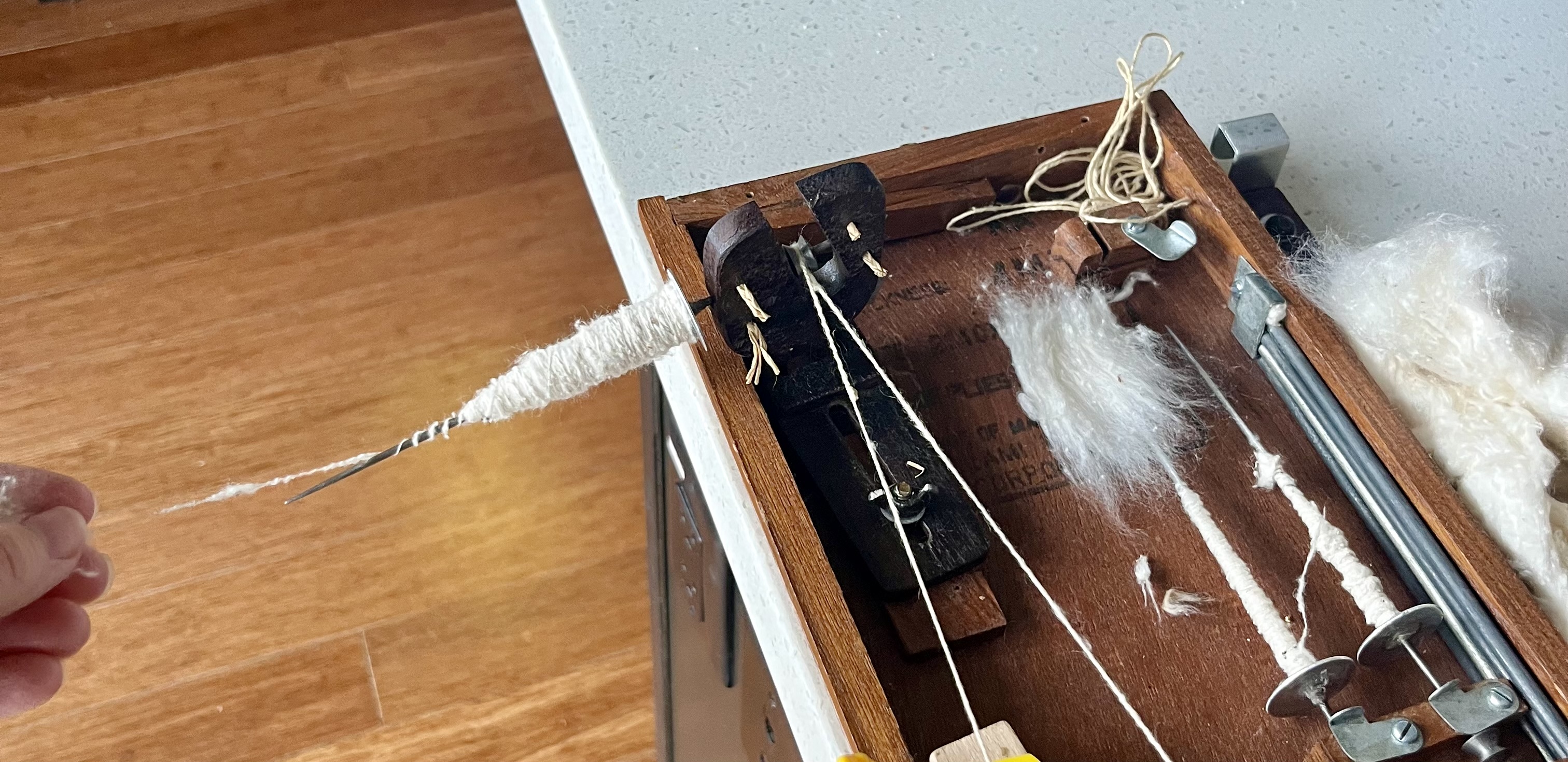
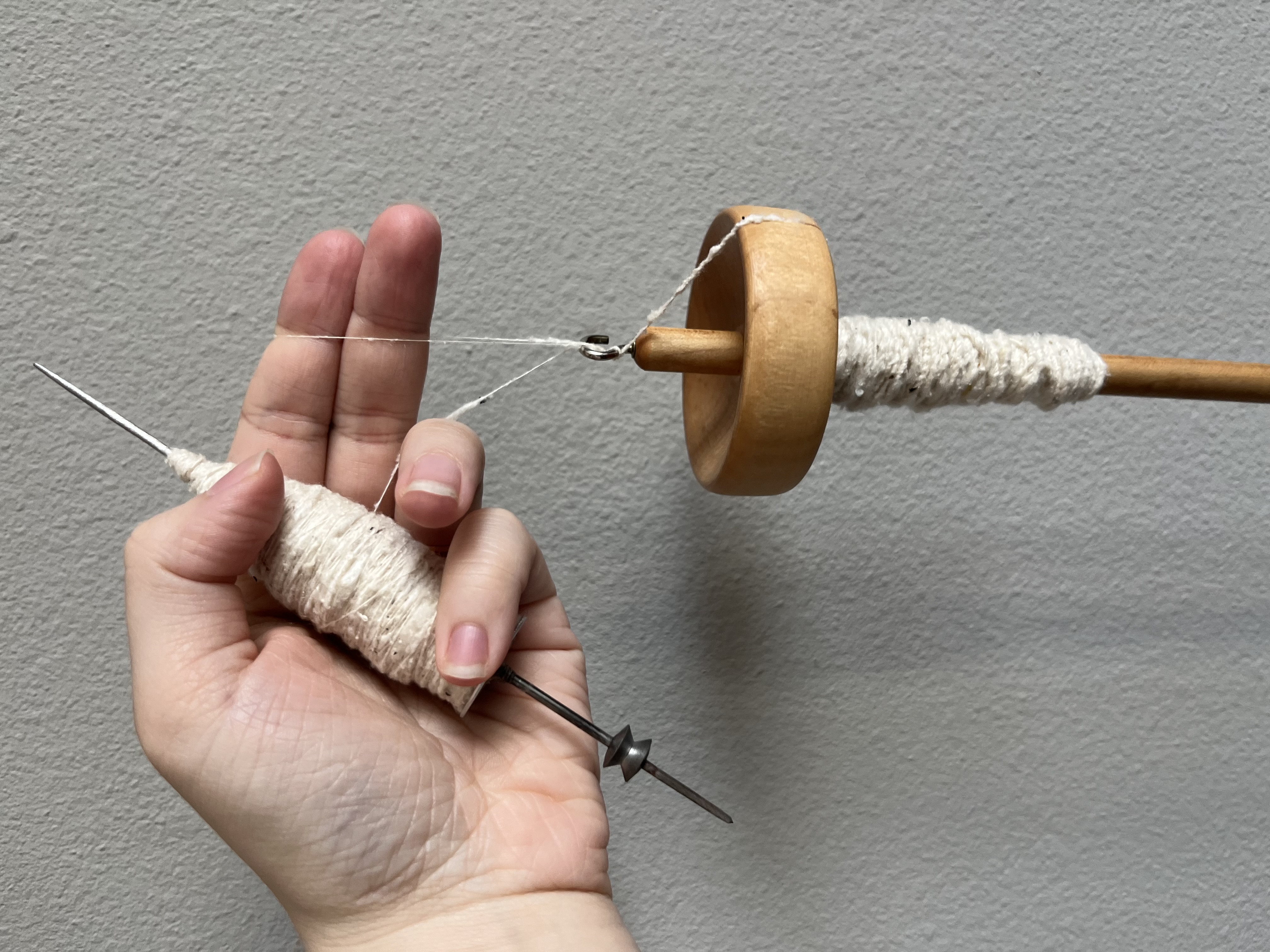
Then I bought my charkha and decided to give spinning the bourette silk another try, and it was a match made in heaven. The charka spins fast enough to lock the short fibers together. The horizontal draft direction minimizes the tension on the fibers before there is twist, meaning the slippery silk is less likely to slide apart and break as your spinning. And the long draw pulls beautifully from the roving after a small bit of fluffing. The two work perfectly together and it is so much fun to spin! I am currently chain plying using a drop spindle and trying to get 750 yards of finished yarn to weave with (a future post). I will keep you updated, but I still have at least 300 yards to go. 
<img src="/assets/images/IMG_1896.jpeg" alt="Photo of Drop Spindle" /></p>]]></content><author><name>Rhianna Lucas</name></author><category term="spinning" /><category term="silk" /><category term="charkha" /><summary type="html"><![CDATA[The book charkha is in my humble opinion the most elegantly designed piece of equipment I have ever come across. When out in public spinning on it strangers frequently stop to marvel and inquire as to how it works. Starting from your right the larger wheel, which is still only five inches in diameter, is connected to a handle which is slotted on over two pins and has a loose knob to allow you to easily spin it. This larger wheel connects to the smaller one (three inches diameter) via a rubber drive band. The smaller wheel is then connected across to a spindle on the far left with a cotton string. The metal spindle sits neatly into a wooden bracket pushing against the pull of the string with a spring creating just the right tension for the spindle to spin. There are holes in the bracket to thread straw or twine through so the bracket is protected from the wear of the spindle spinning. This system creates about an 80:1 gear ratio, meaning every one circle you make with the handle will spin the tip of your spindle will spin 80 times. That is fast! The traditional European style spinning wheels typically range from a 5:1 to 20:1 ratio. Why so fast? The speed you spin at depends on the staple length of your fiber. Fibers with long staple lengths can be spun slower/less and fibers with short staple length need to be spun faster/more to hold together. Charkhas are made to spin cotton which has a very short staple length, hence the 80:1 ratio. Many spinners used to European style wheels are often intimidate by book charkhas, because you only have one hand for fiber management while the other hand spins the wheel. However I encourage them to try it, because with such a short staple length I find one hand is plenty to draft with. So this long winded explanation of the mechanics puts us all on the same page of wondering if the charkha is built for spinning very short fibers like cotton, what on earth am I doing spinning silk with it? I found a big bag of roving at the creative reuse center that was tied shut and had “silk” written on the bad with sharpie, I figured I would give it a go and grabbed it. But when I tried spinning it on my drop spindle I got no where. The fibers were bourette silk, which made from the short by product fibers of silk processing. With such short and slippery fibers no matter the spindle or technique I could barely get it twisted into singles and I was not having a good time. The bag then got shoved in to storage box and forgotten about. Then I bought my charkha and decided to give spinning the bourette silk another try, and it was a match made in heaven. The charka spins fast enough to lock the short fibers together. The horizontal draft direction minimizes the tension on the fibers before there is twist, meaning the slippery silk is less likely to slide apart and break as your spinning. And the long draw pulls beautifully from the roving after a small bit of fluffing. The two work perfectly together and it is so much fun to spin! I am currently chain plying using a drop spindle and trying to get 750 yards of finished yarn to weave with (a future post). I will keep you updated, but I still have at least 300 yards to go.]]></summary></entry><entry><title type="html">Some Recent Weaves</title><link href="https://rhiannasfiberarts.github.io/blog/2026/04/05/Some-Recent-Weaves/" rel="alternate" type="text/html" title="Some Recent Weaves" /><published>2026-04-05T00:00:00+00:00</published><updated>2026-04-05T00:00:00+00:00</updated><id>https://rhiannasfiberarts.github.io/blog/2026/04/05/Some-Recent-Weaves</id><content type="html" xml:base="https://rhiannasfiberarts.github.io/blog/2026/04/05/Some-Recent-Weaves/"><![CDATA[<p>These are photos from a few of my recent weaving projects. 
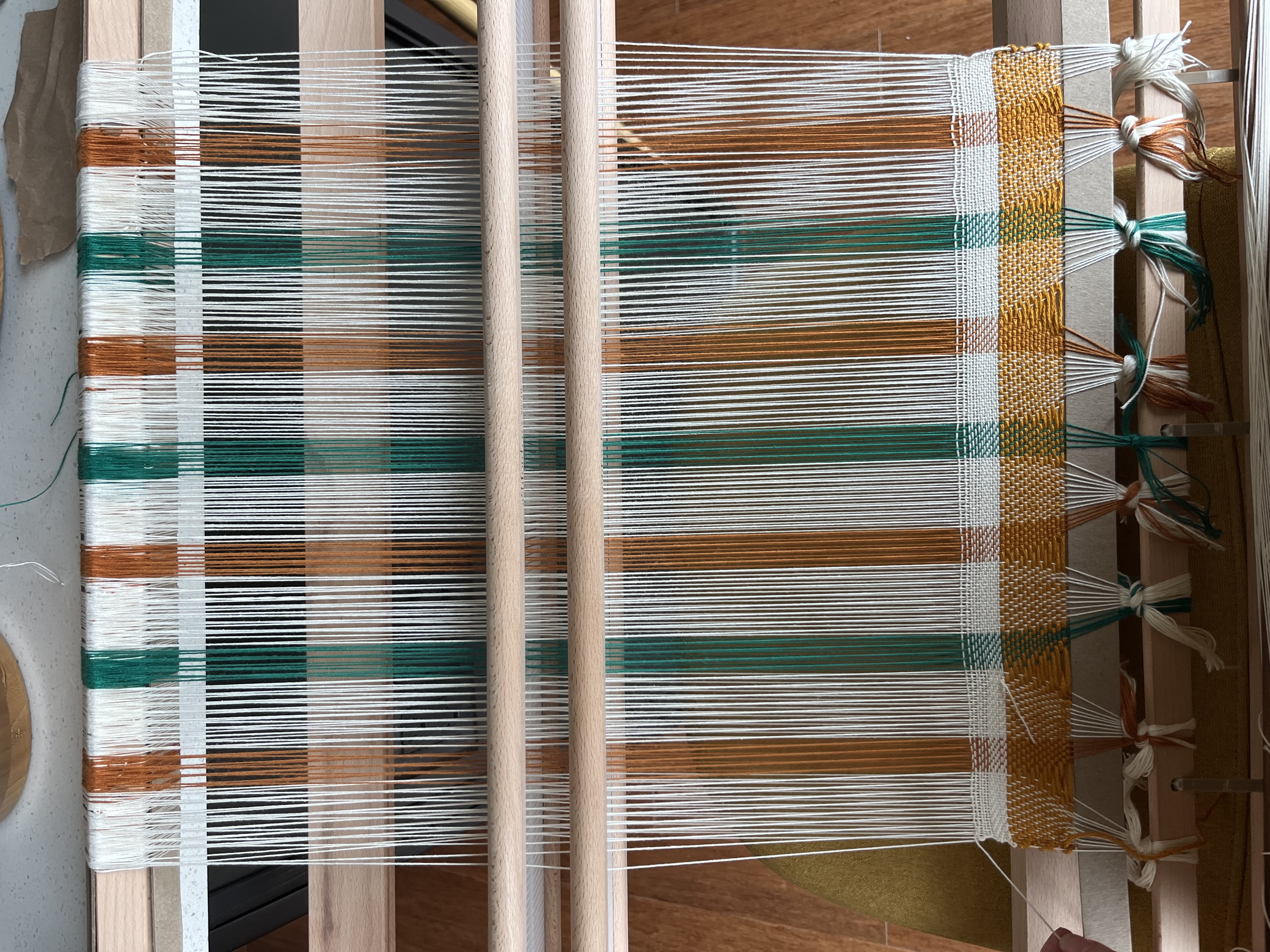
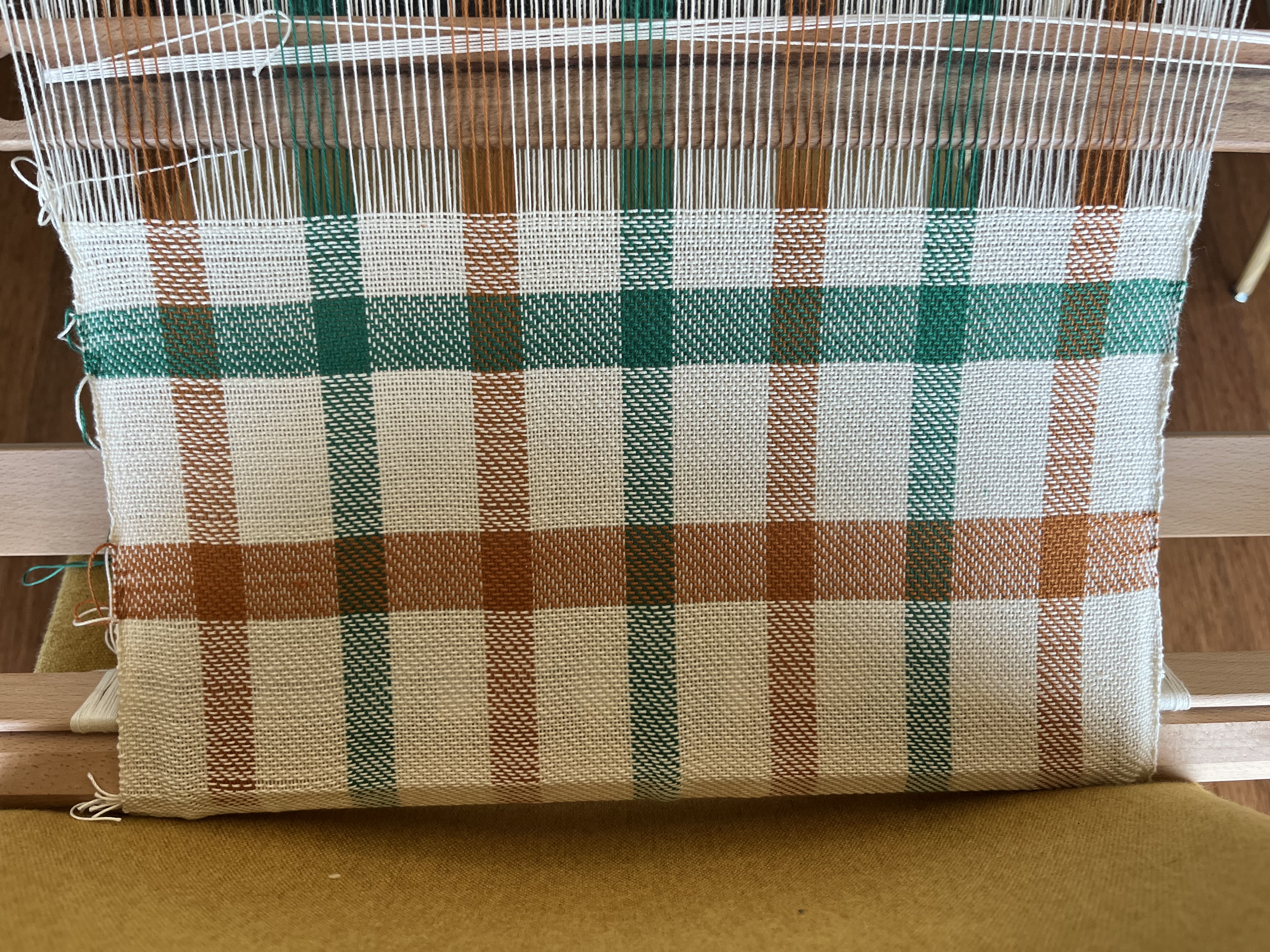
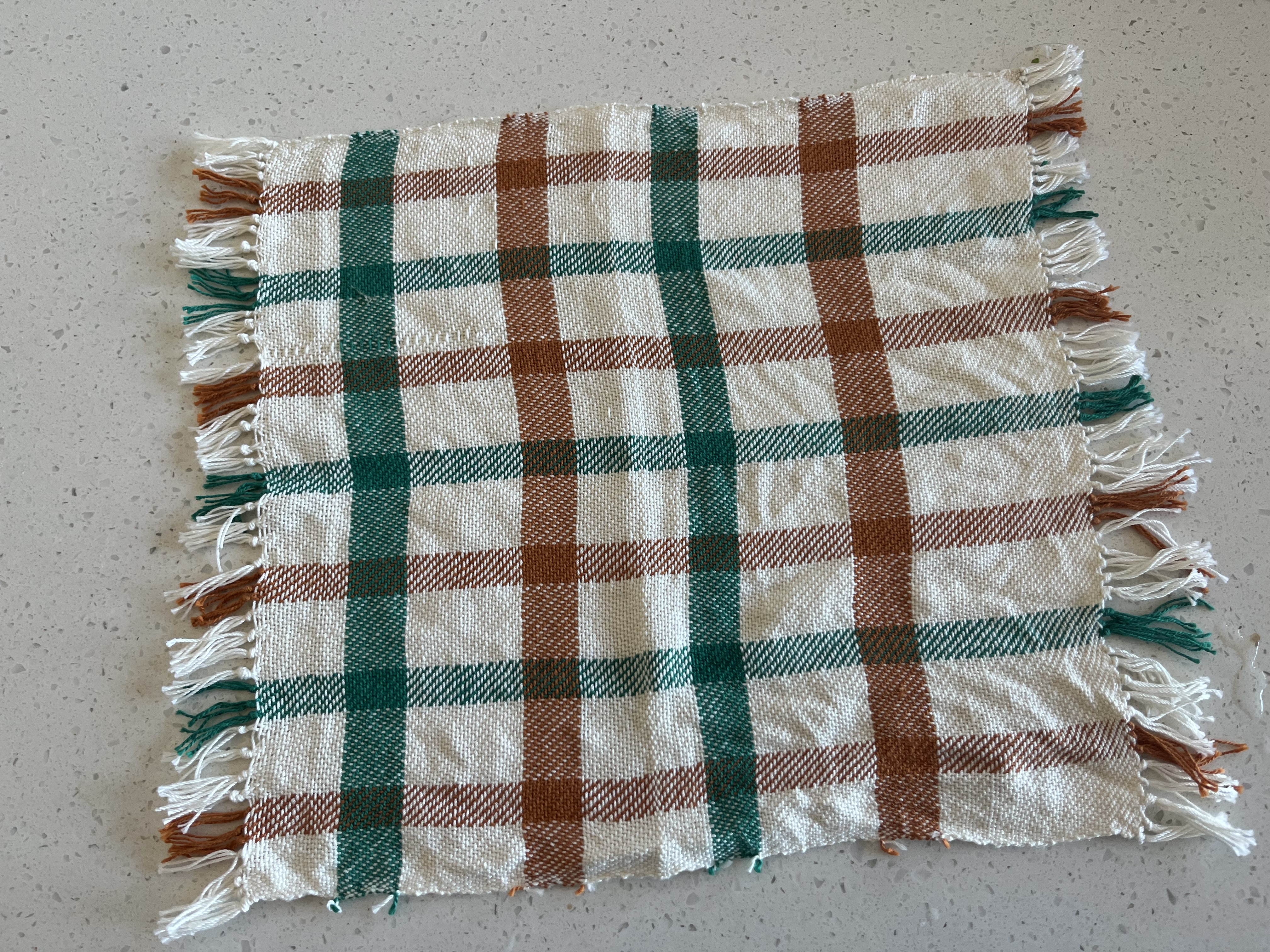
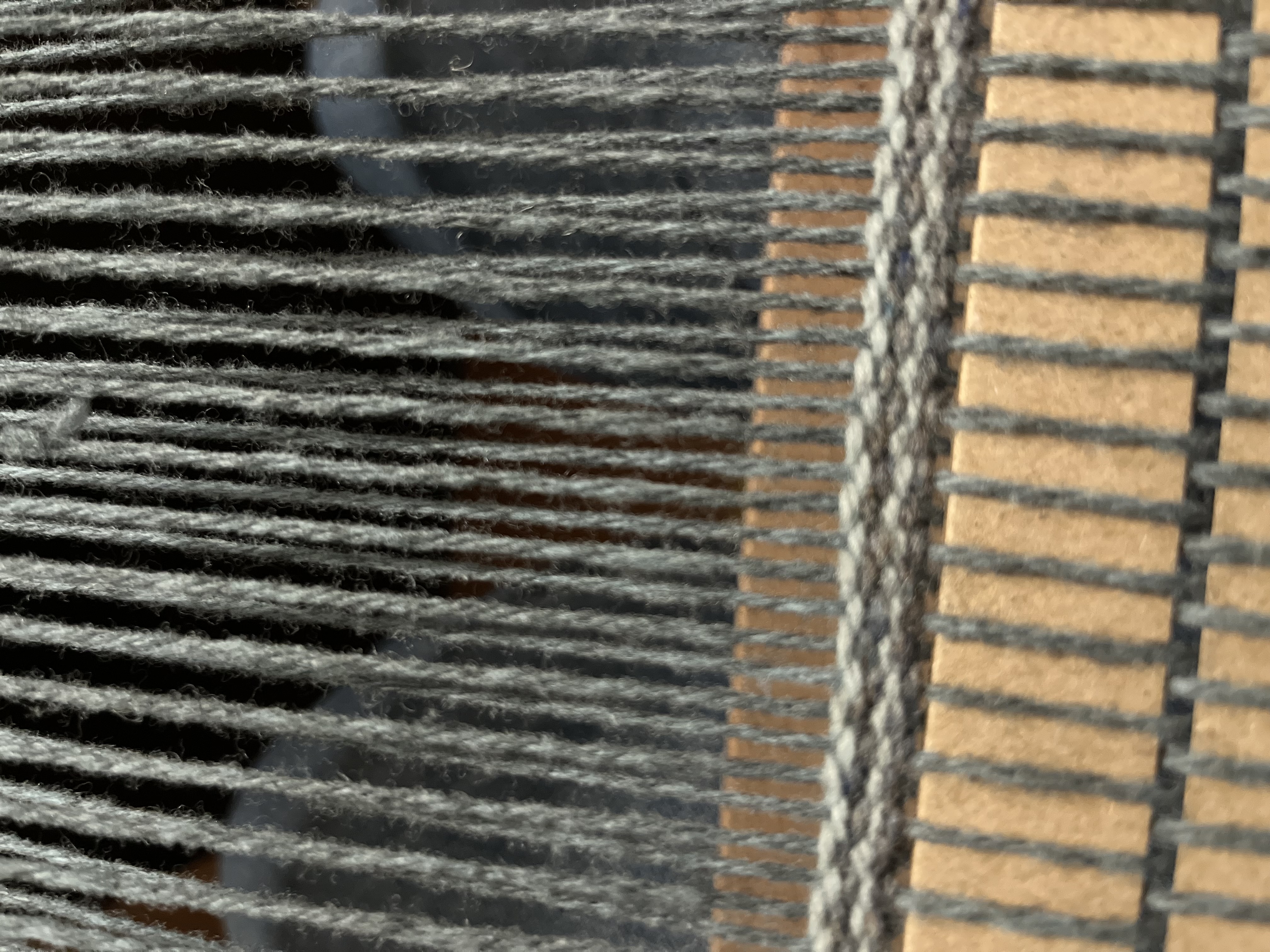
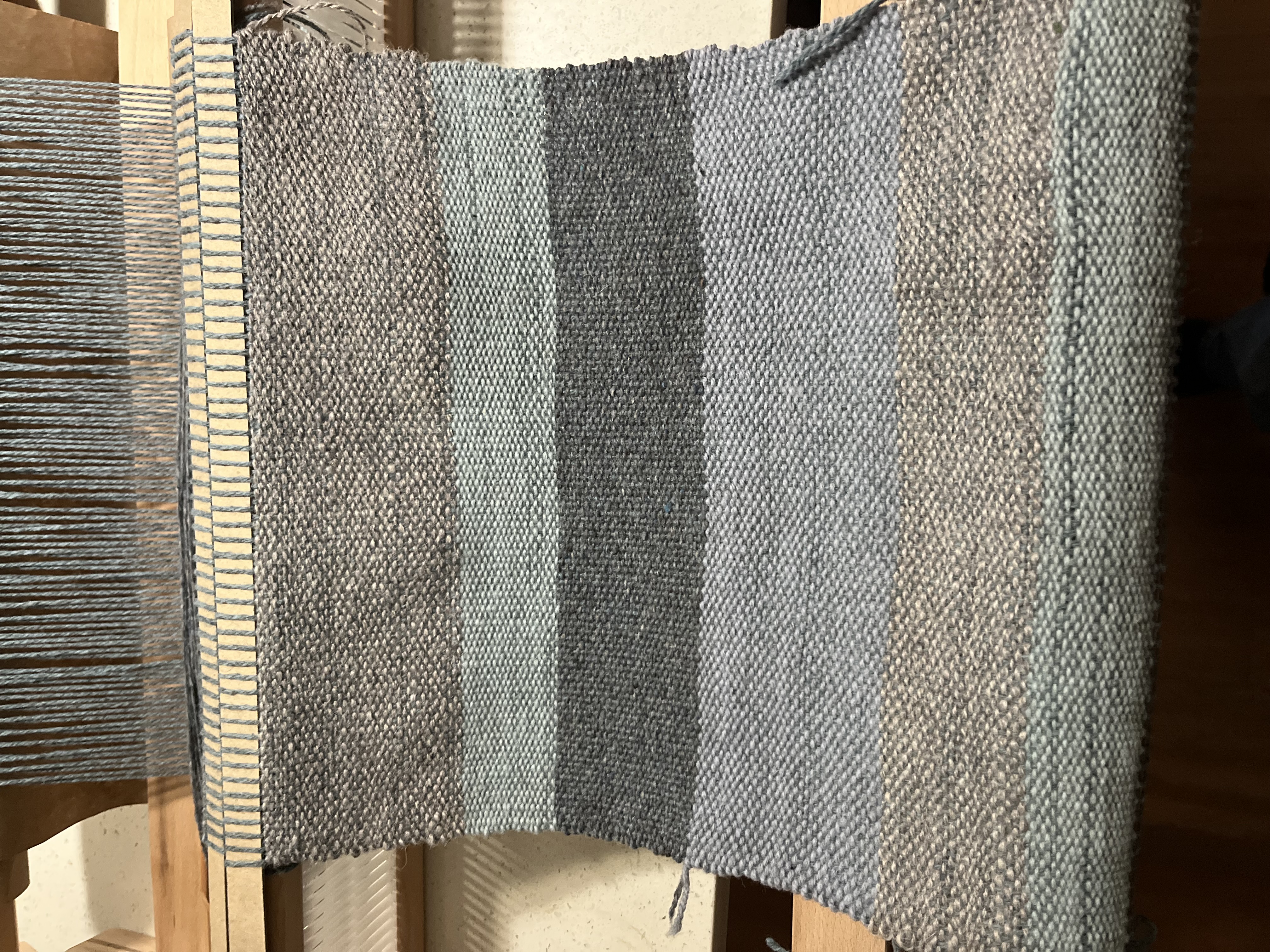
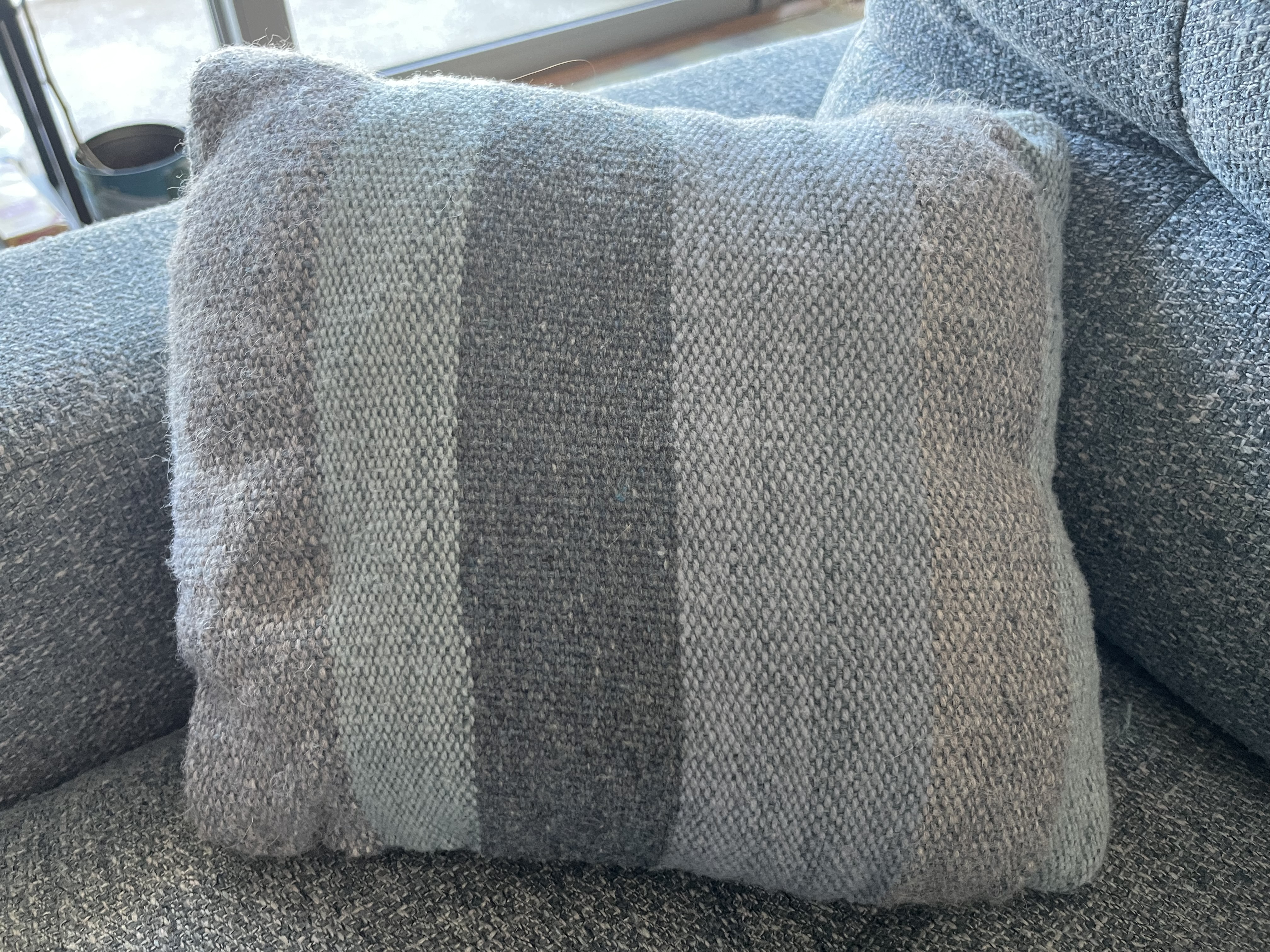
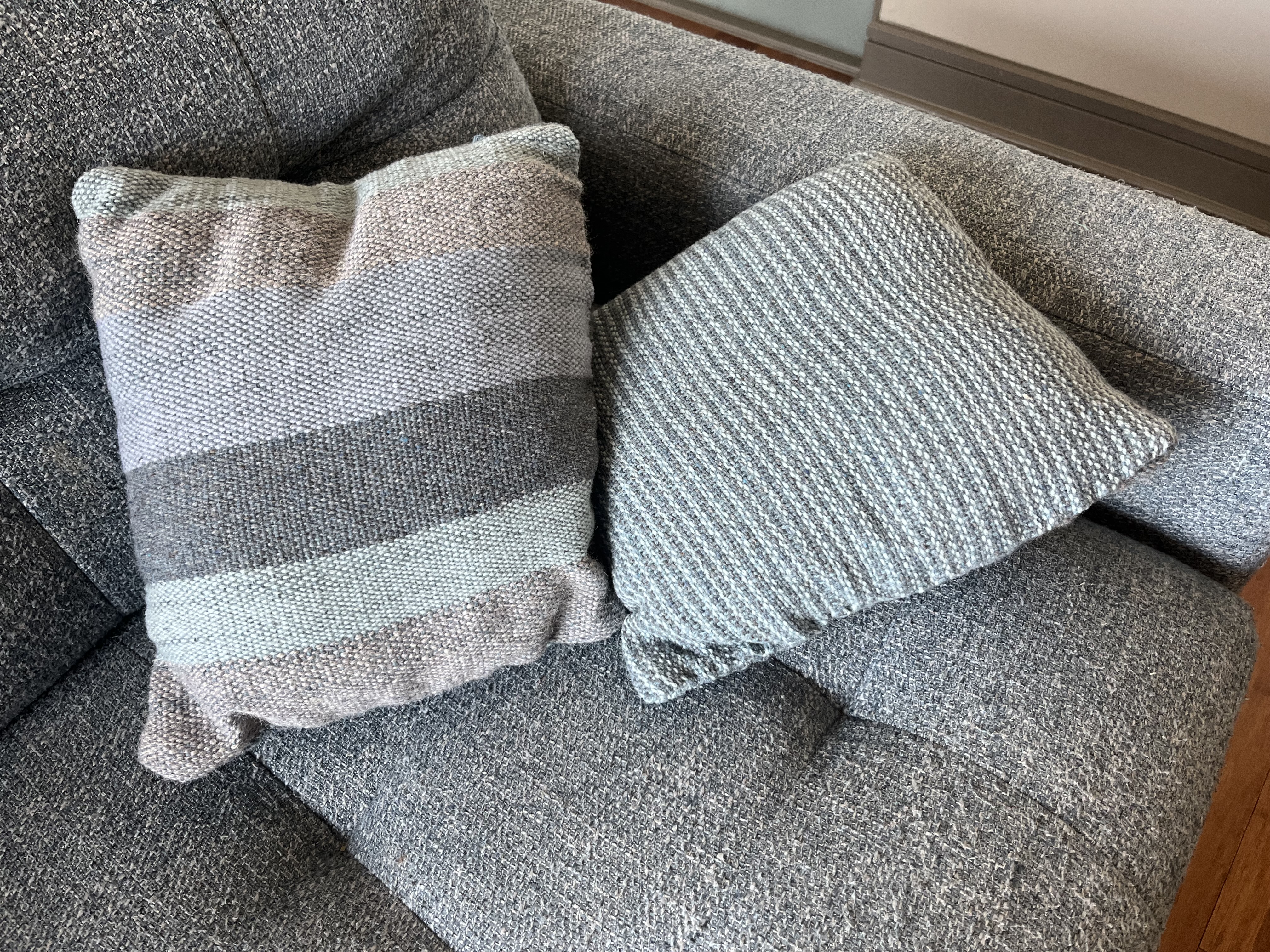
The pillows are a mix of blue and gray wool I got at the Studio Tour garage sale. The washcloth is a 2/1 twill pattern with cotton that I got from a craft exchange (the white) and a local yarn store in my home town (the green and orange). I love the results from both projects, and hope you do as well!</p>

<p><img src="/assets/images/IMG_1739.jpeg" alt="Photo of a warped loom with white, green, and orange." />
<img src="/assets/images/IMG_1744.jpeg" alt="Photo of loom with some weaving on it." />
<img src="/assets/images/IMG_1756.jpeg" alt="Photo of finished wash cloth." /></p>

<p><img src="/assets/images/IMG_1646.jpeg" alt="Photo of loom warped with a blue gray wool yarn." />
<img src="/assets/images/IMG_1647.jpeg" alt="Photo of same loom with some progress on weaving." />
<img src="/assets/images/IMG_1791.jpeg" alt="Phot0 of one finished pillow, there are large stripes of blue and gray." />
<img src="/assets/images/IMG_1660.jpeg" alt="Photo og both pillows, the back has pinstripes" /></p>]]></content><author><name>Rhianna Lucas</name></author><category term="weaving" /><category term="ridgid heddle" /><summary type="html"><![CDATA[These are photos from a few of my recent weaving projects. The pillows are a mix of blue and gray wool I got at the Studio Tour garage sale. The washcloth is a 2/1 twill pattern with cotton that I got from a craft exchange (the white) and a local yarn store in my home town (the green and orange). I love the results from both projects, and hope you do as well!]]></summary></entry><entry><title type="html">Nandina Experiments</title><link href="https://rhiannasfiberarts.github.io/blog/2026/04/04/Nandine-Experiments/" rel="alternate" type="text/html" title="Nandina Experiments" /><published>2026-04-04T00:00:00+00:00</published><updated>2026-04-04T00:00:00+00:00</updated><id>https://rhiannasfiberarts.github.io/blog/2026/04/04/Nandine-Experiments</id><content type="html" xml:base="https://rhiannasfiberarts.github.io/blog/2026/04/04/Nandine-Experiments/"><![CDATA[<p>I am currently investigating the potential of various invasive species in my area as dye stuff, and my first target was Nandina domestica, also know as heavenly bamboo. A precursory search with the key words “Nandina” and “Dye” will yield a few illusive and questionably reliable claims that the stems can yield a blueish-brown color. I received no such results when I attempted it, but I did notice a bright yellow present just beneath the bark.</p>

<p>Upon further research into the source of this color, I learned it was the compound berberine. Berberine is an alkaloid that has historically been used as a pigment with a golden-yellow hue, and can be extracted using an alcohol extraction. As my previous attempts had just been the usually low temperature stewing in water usually done in natural dyeing, I thought an Alcohol extraction sounded quite promising!</p>

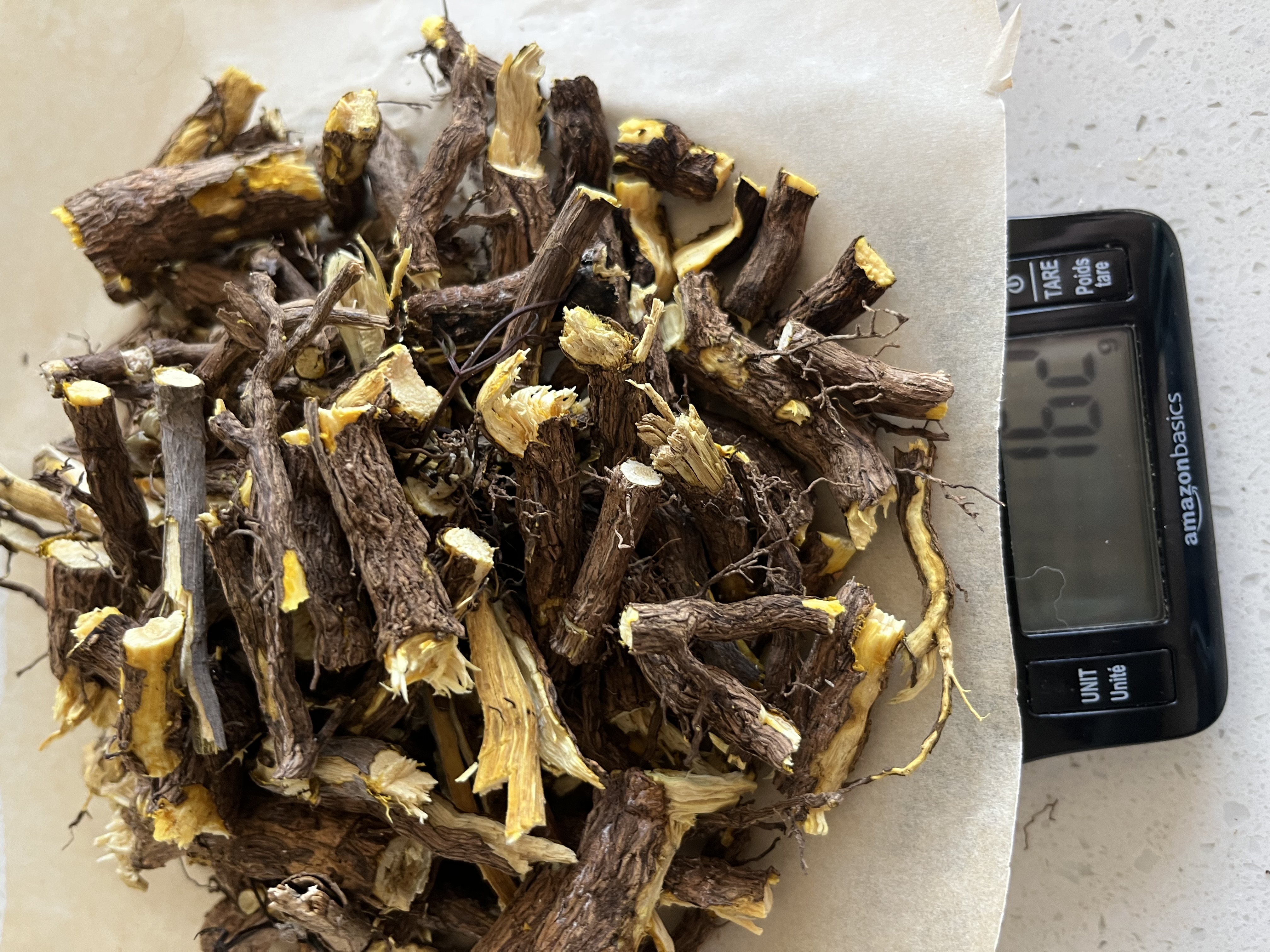
<p>So I proceeded to my local liquor store to purchase the highest proof I could find! This was followed by a trip to a local Nandina patch , and an hour or so of digging. This yielded me 162g of roots, which would be more than enough for my experiment.</p>

<p><img src="/assets/images/IMG_1828.jpeg" alt="Photo of a kitchen scale with a liner and a pile of chopped up yellowish roots. The scale displays 162g." /></p>

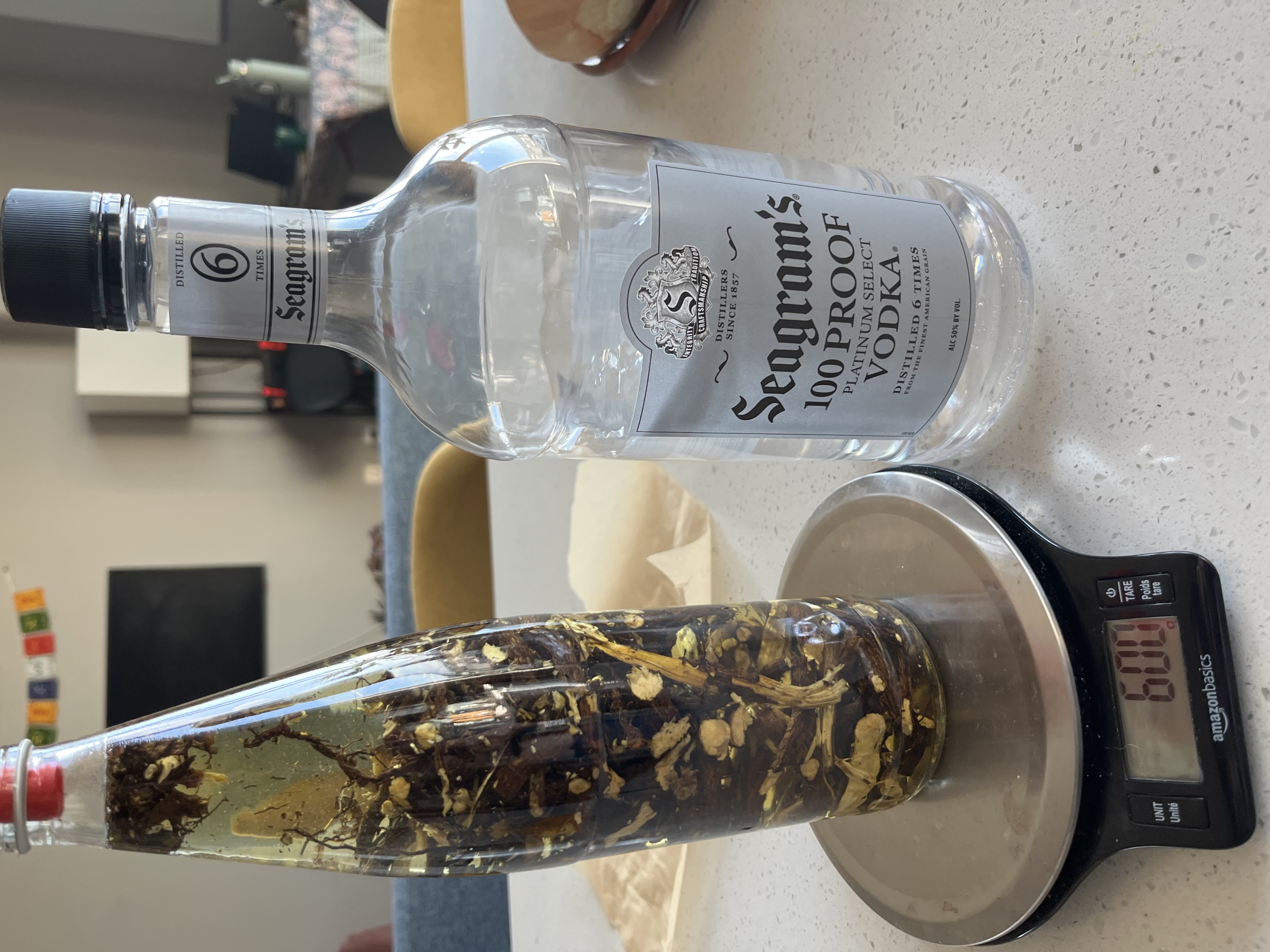
<p>Once I chopped them into small enough pieces (a messy process done with a hatchet at my kitchen counter due to my clippers being in the mail on the way back from being forgotten at a friends) I put them all into a bottle. You may be wondering why I didn’t use a jar they could easily be removed from, and the answer is that I was impatient to get started and didn’t have an empty at hand. I then filled the bottle with 100 proof vodka and have it a shake!</p>

<p><img src="/assets/images/IMG_1831.jpeg" alt="Photo of a glass bottle filled with root pieces and clear liquid next to a bottle labeled 100 Proof Vodka." /></p>

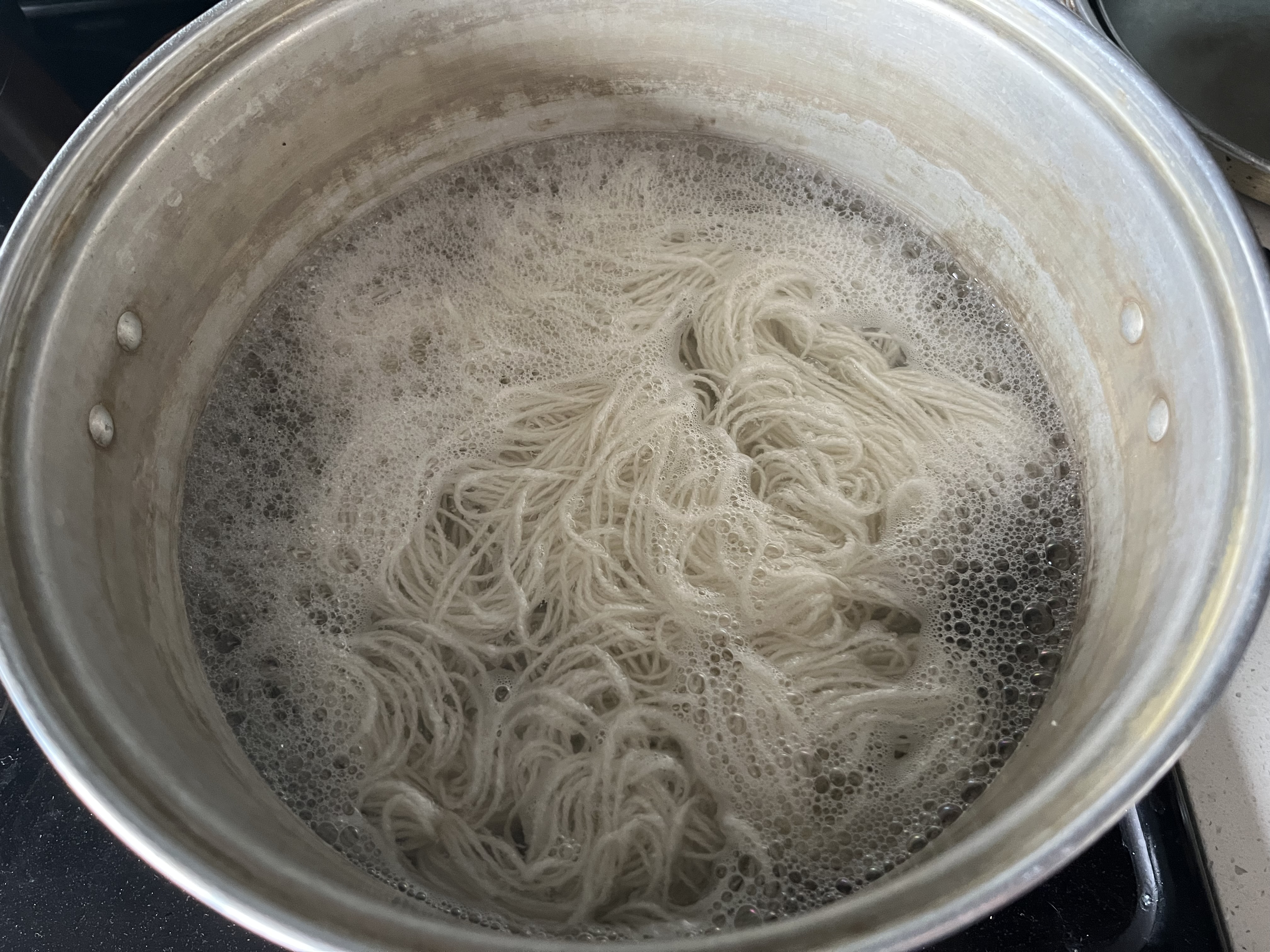
<p>I let the extraction steep for 5 days. While it was steeping I began preparing my yarn for dyeing. The yarn I am using is an 80% Merino 20% Angora blend that I got on sale at knit pics. The first step was scouring, which I did with about 7g dawn dish soap for a 50g skein, and kept just below a simmer for around 45 minutes.</p>

<p><img src="/assets/images/IMG_1854.jpeg" alt="Photo of a large pot filled with bubbly water with white yarn floating in it" /></p>

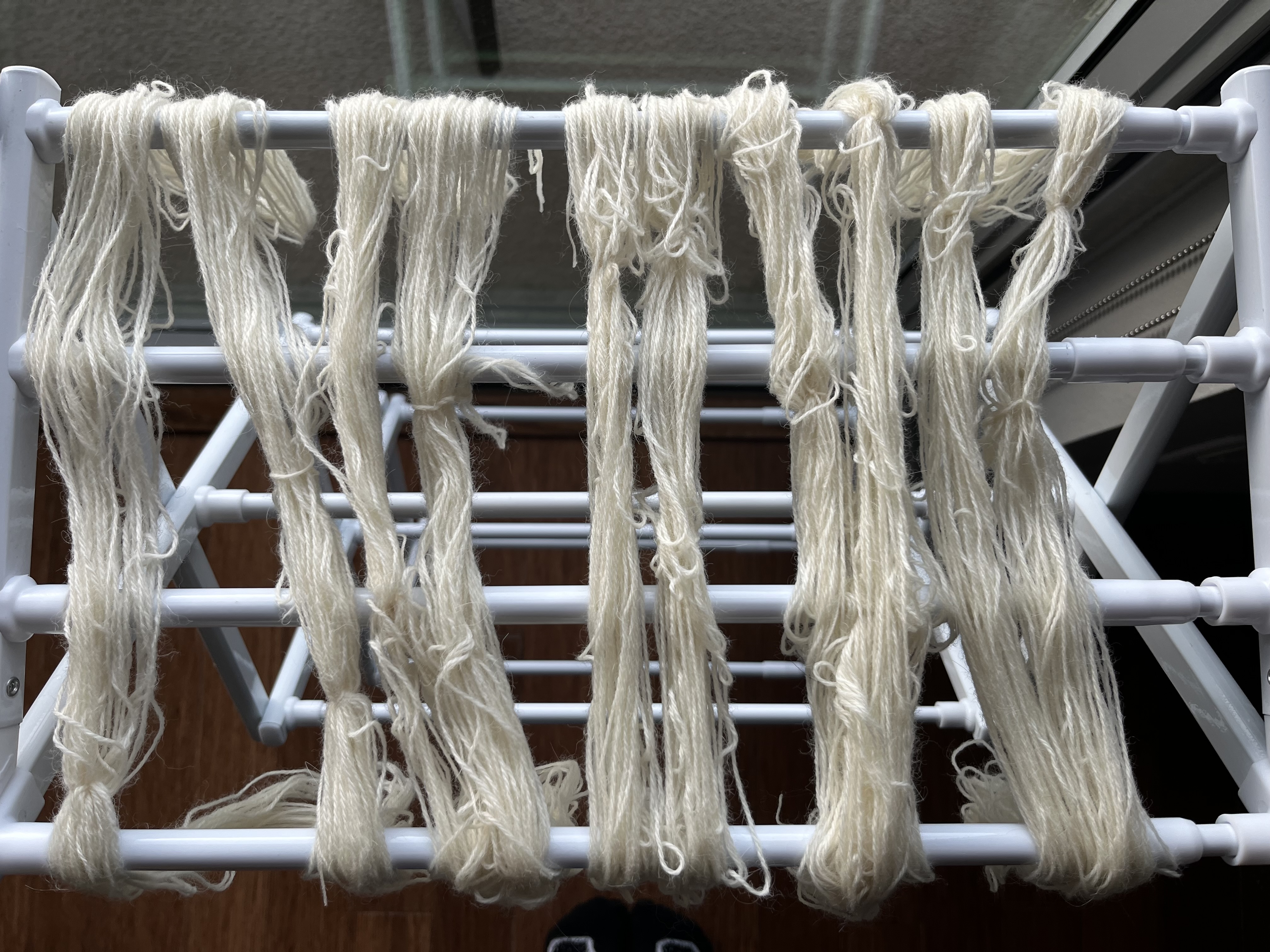
<p>After scouring, I rinsed the yarn twice and moved it immediately to the mordant bath. I mordant with 15% WOF Alum Sulfate and included 7% WOF cream of tartar to help keep the yarn soft. I kept the mordant bath just below a simmer for an hour, then let the yarn and water cool until it was room temp (several hours). After taking the yarn out I gave it a quick rinse and set it to dry.</p>

<p><img src="/assets/images/IMG_1858.jpeg" alt="Photo of yarn lying across a drying rack." /></p>

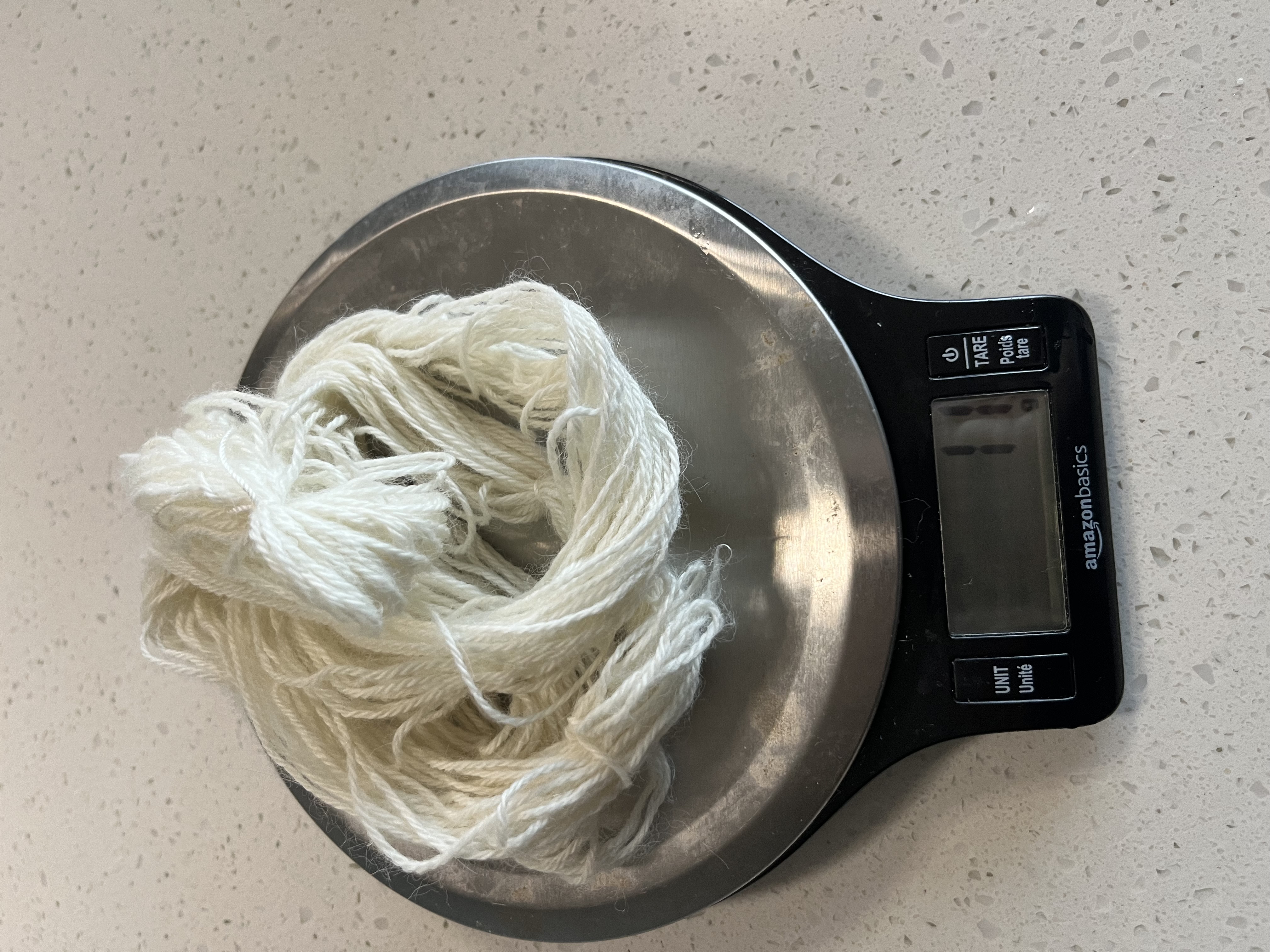
<p>Before dyeing I split the yarn into about 10g mini skeins, so as to keep the scale of my experiments smaller and less wasteful.</p>

<p><img src="/assets/images/IMG_1862.jpeg" alt="Photo of yarn on a scale reading 11g" /></p>

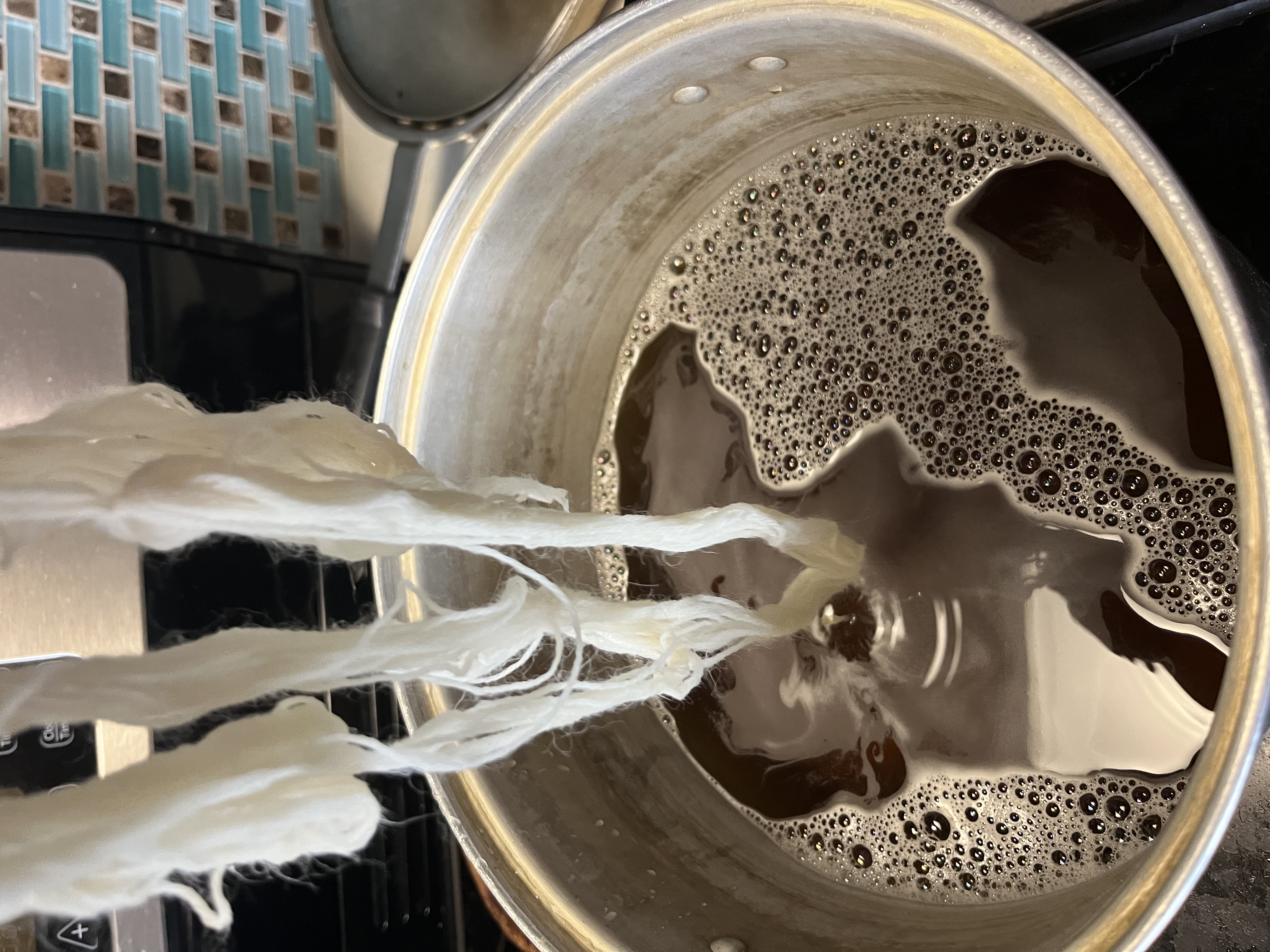
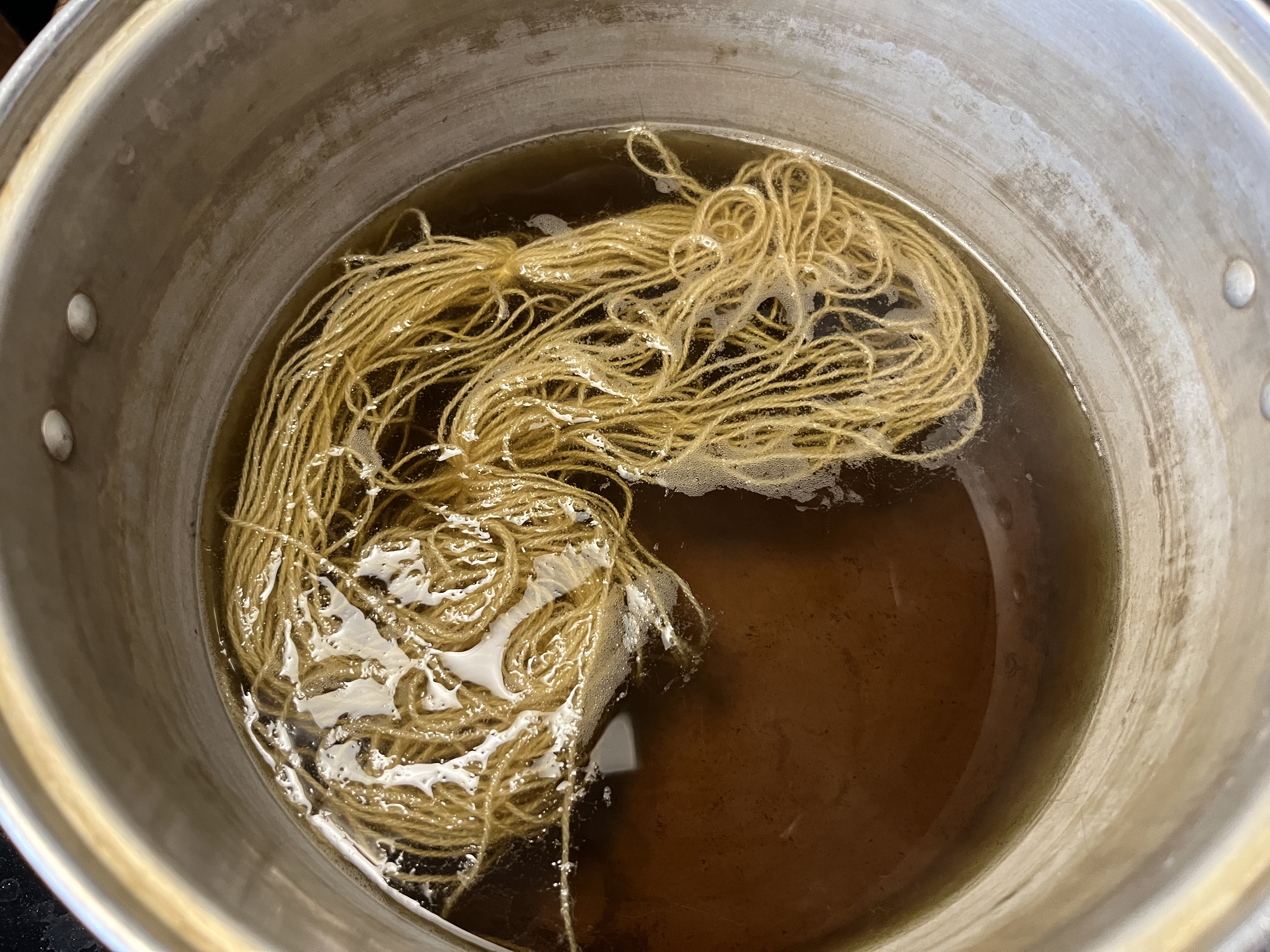
<p>At last it was time for the dye pot! I poured the alcohol extraction through a strainer into the pot and added enough water for the skein to move freely and put it on the stove at low heat. I wet the skein and added it in before the water was hot and slowly brought it to just below a simmer. I kept it there for an hour, gently stirring occasionally while being carful not to agitate too much and cause felting. As you can see the yarn appears in the depot to be taking up a nice color!</p>

<p><img src="/assets/images/IMG_1863.jpeg" alt="Photo of yarn being dipped into a pot of yellow-brown liquid" /></p>

<p><img src="/assets/images/IMG_1868.jpeg" alt="Photo of yellowish yarn floating in a pot of yellow-brown liquid" /></p>

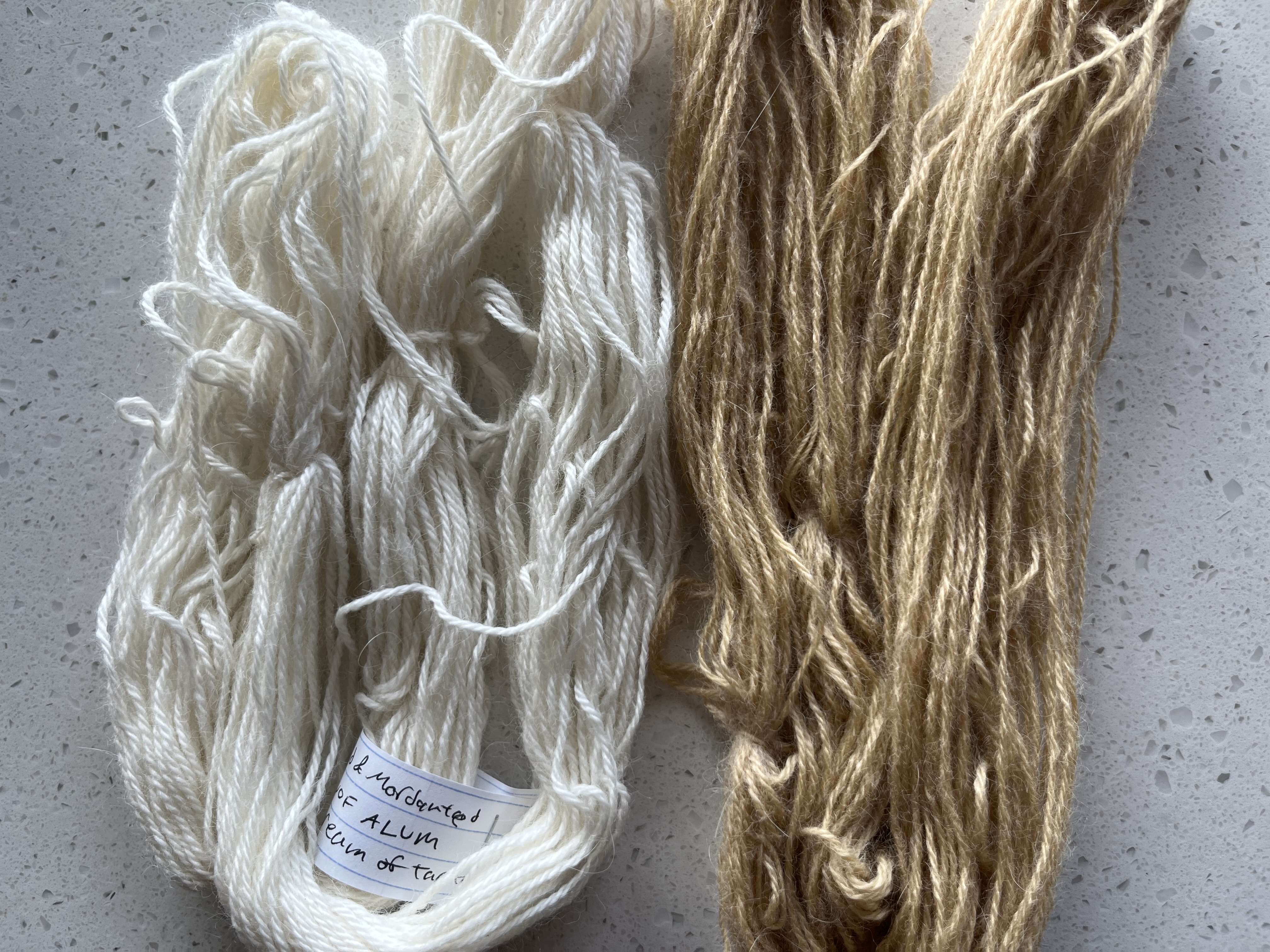
<p>But the true colors aren’t know until the yarn is out of the depot and dry. The end results were not a golden yellow as I was hoping, and while a nice warm brown color was achieved I am not sure it was worth the effort.</p>

<p><img src="/assets/images/IMG_1875.jpeg" alt="Photo of white undyed yarn next to a warm brown yarn." /></p>

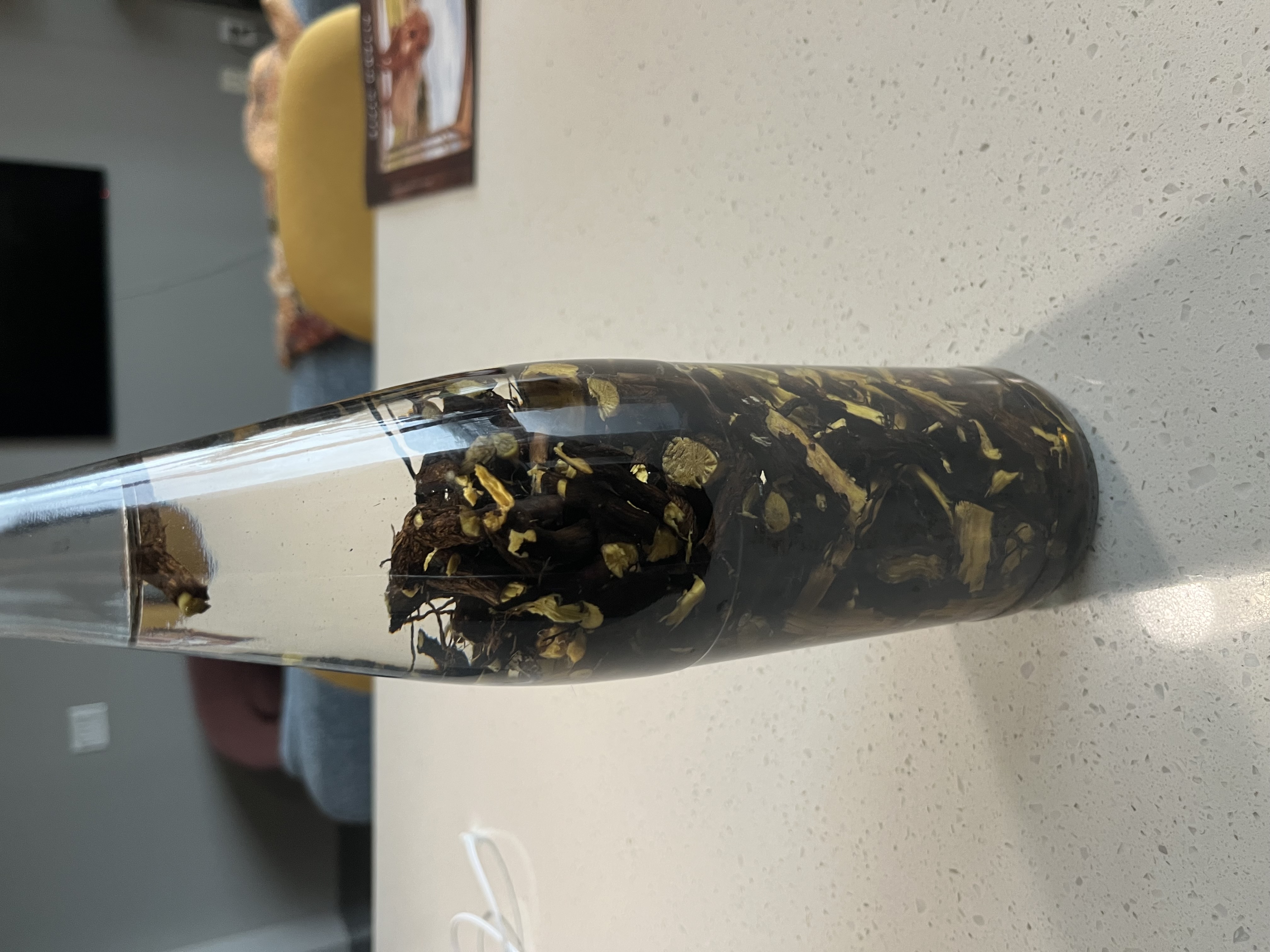
<p>I did not save the dye-pot despite there being pigment left because honestly I didn’t think it was worth the fiber. That being said I did refill the root bottle with vodka to see of a second extract might pull a bit different color. So the Nandina experiments will continue…</p>

<p><img src="/assets/images/IMG_1866.jpeg" alt="Photo of a bottle of roots filled with clear liquid." /></p>]]></content><author><name>Rhianna Lucas</name></author><category term="dyeing" /><category term="nandina" /><category term="invasive" /><summary type="html"><![CDATA[I am currently investigating the potential of various invasive species in my area as dye stuff, and my first target was Nandina domestica, also know as heavenly bamboo. A precursory search with the key words “Nandina” and “Dye” will yield a few illusive and questionably reliable claims that the stems can yield a blueish-brown color. I received no such results when I attempted it, but I did notice a bright yellow present just beneath the bark.]]></summary></entry><entry><title type="html">Welcome to Rhianna’s Fiber Arts</title><link href="https://rhiannasfiberarts.github.io/blog/2026/04/03/welcome-to-fiber-and-thread/" rel="alternate" type="text/html" title="Welcome to Rhianna’s Fiber Arts" /><published>2026-04-03T00:00:00+00:00</published><updated>2026-04-03T00:00:00+00:00</updated><id>https://rhiannasfiberarts.github.io/blog/2026/04/03/welcome-to-fiber-and-thread</id><content type="html" xml:base="https://rhiannasfiberarts.github.io/blog/2026/04/03/welcome-to-fiber-and-thread/"><![CDATA[<p>Hello World!</p>

<p>I am starting this blog mostly as a form of record keeping. I am a fiber artist and pursue	pretty much anything that falls under that umbrella. My current fixations are spinning, weaving, and natural dyeing, but I am sure more avenues of fiber art will be pursued in the future.</p>

<p>So stick around if you would like to follow along with all my fiber art adventures!</p>]]></content><author><name>Rhianna Lucas</name></author><category term="intro" /><summary type="html"><![CDATA[Hello World!]]></summary></entry></feed>