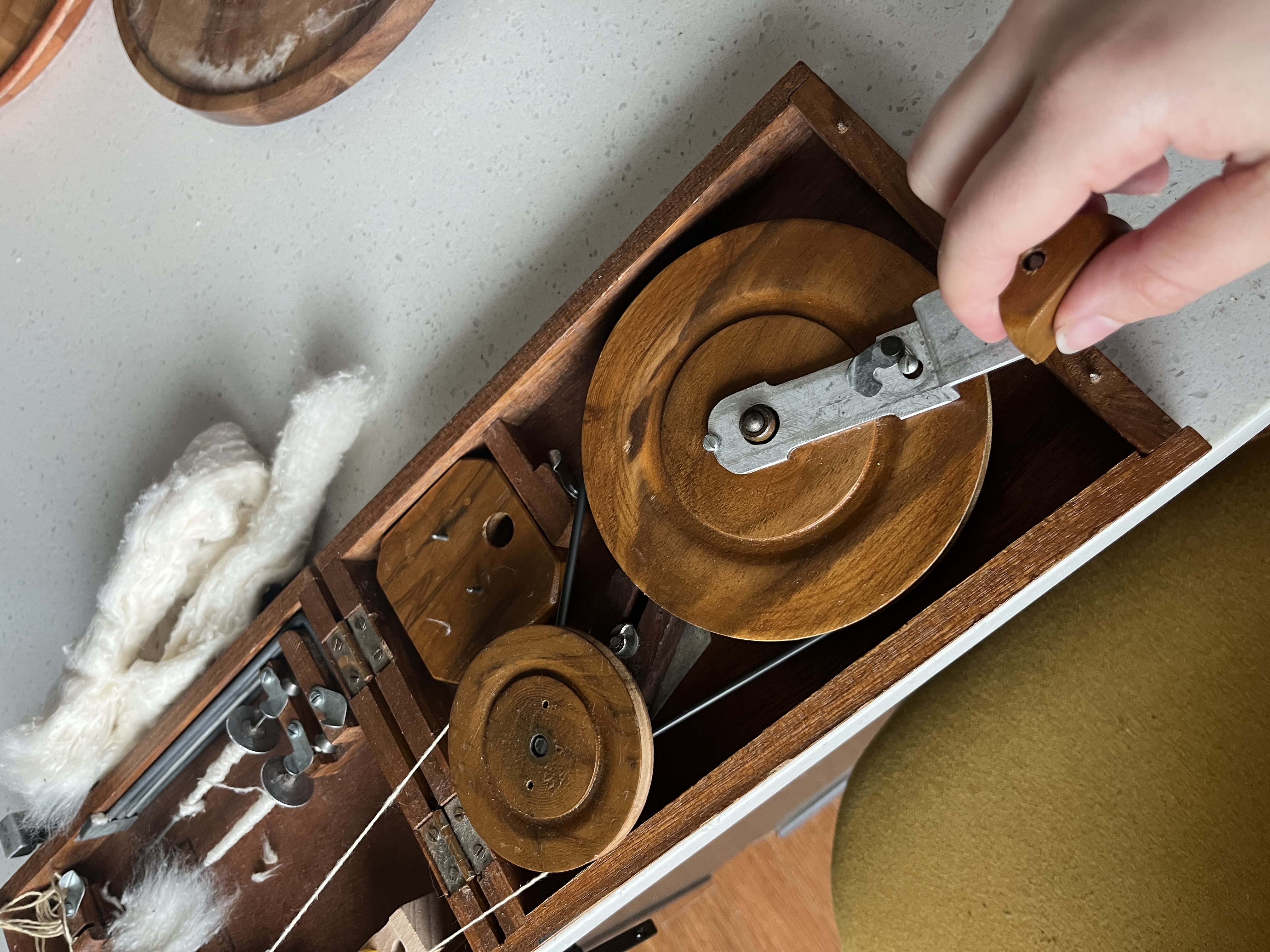
The book charkha is in my humble opinion the most elegantly designed piece of equipment I have ever come across. When out in public spinning on it strangers frequently stop to marvel and inquire as to how it works. Starting from your right the larger wheel, which is still only five inches in diameter, is connected to a handle which is slotted on over two pins and has a loose knob to allow you to easily spin it. This larger wheel connects to the smaller one (three inches diameter) via a rubber drive band. The smaller wheel is then connected across to a spindle on the far left with a cotton string. The metal spindle sits neatly into a wooden bracket pushing against the pull of the string with a spring creating just the right tension for the spindle to spin. There are holes in the bracket to thread straw or twine through so the bracket is protected from the wear of the spindle spinning. This system creates about an 80:1 gear ratio, meaning every one circle you make with the handle will spin the tip of your spindle will spin 80 times. That is fast! The traditional European style spinning wheels typically range from a 5:1 to 20:1 ratio. Why so fast?
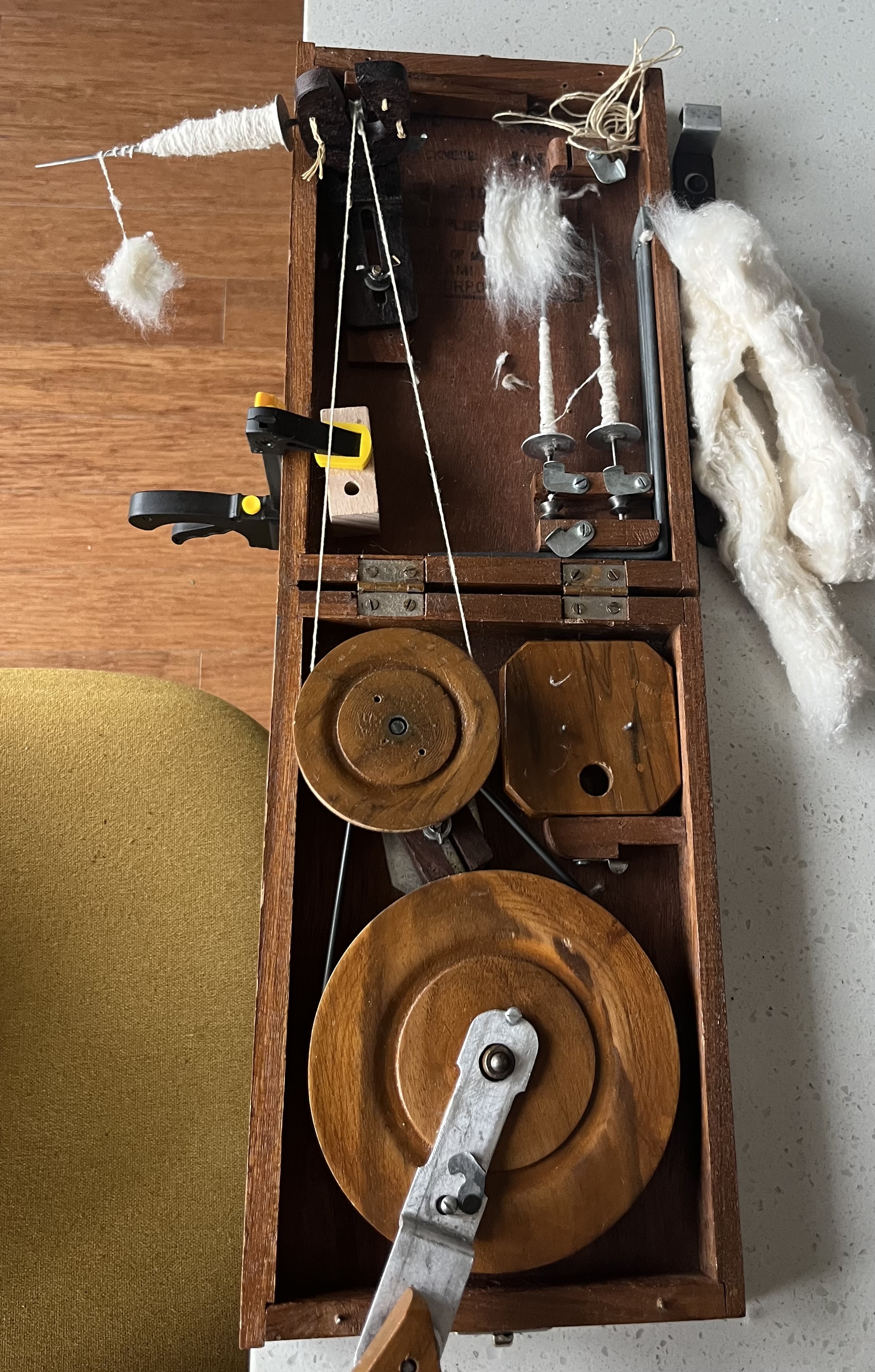 The speed you spin at depends on the staple length of your fiber. Fibers with long staple lengths can be spun slower/less and fibers with short staple length need to be spun faster/more to hold together. Charkhas are made to spin cotton which has a very short staple length, hence the 80:1 ratio. Many spinners used to European style wheels are often intimidate by book charkhas, because you only have one hand for fiber management while the other hand spins the wheel. However I encourage them to try it, because with such a short staple length I find one hand is plenty to draft with.
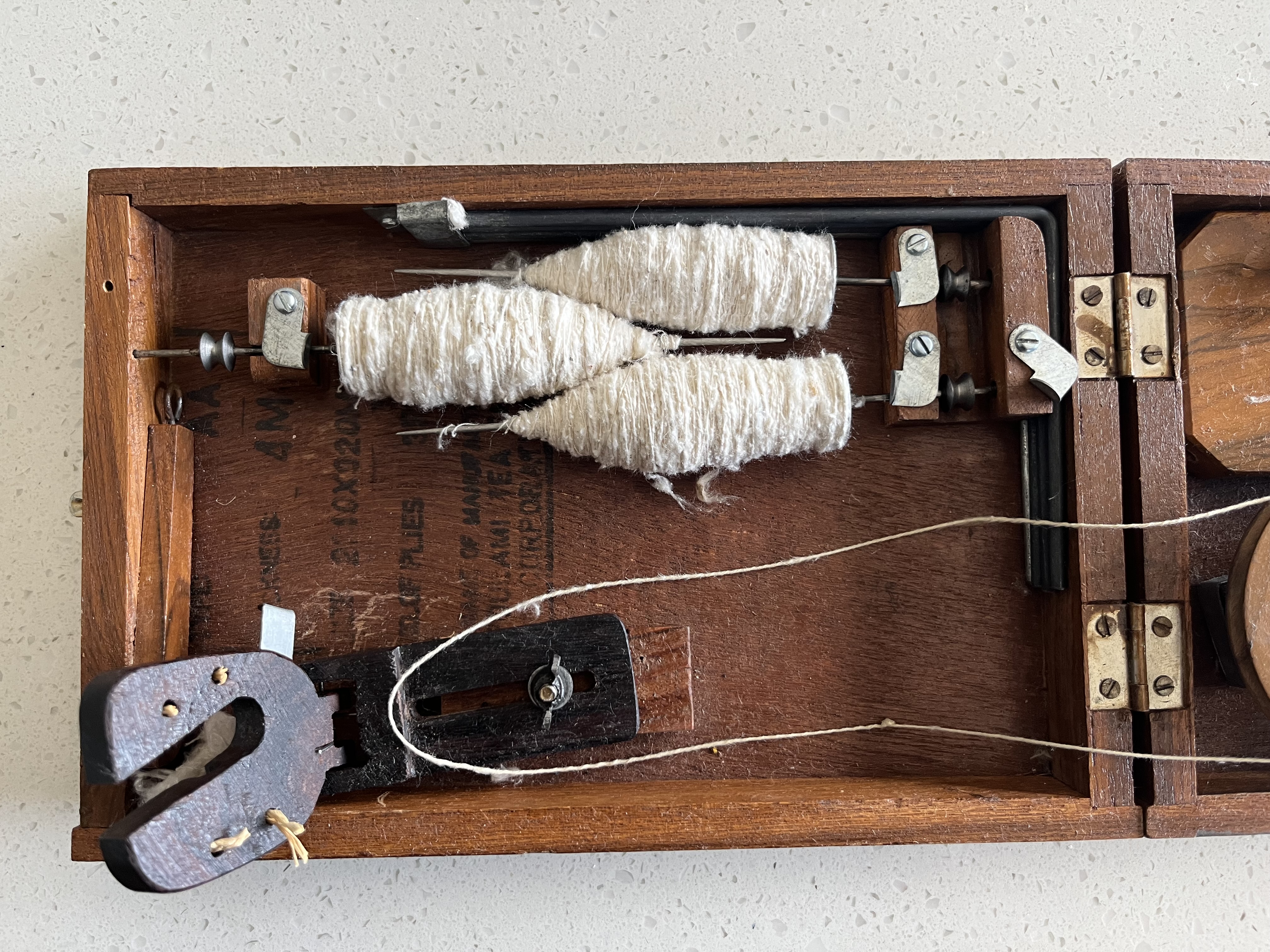 So this long winded explanation of the mechanics puts us all on the same page of wondering if the charkha is built for spinning very short fibers like cotton, what on earth am I doing spinning silk with it?
 I found a big bag of roving at the creative reuse center that was tied shut and had “silk” written on the bad with sharpie, I figured I would give it a go and grabbed it. But when I tried spinning it on my drop spindle I got no where. The fibers were bourette silk, which made from the short by product fibers of silk processing. With such short and slippery fibers no matter the spindle or technique I could barely get it twisted into singles and I was not having a good time. The bag then got shoved in to storage box and forgotten about.
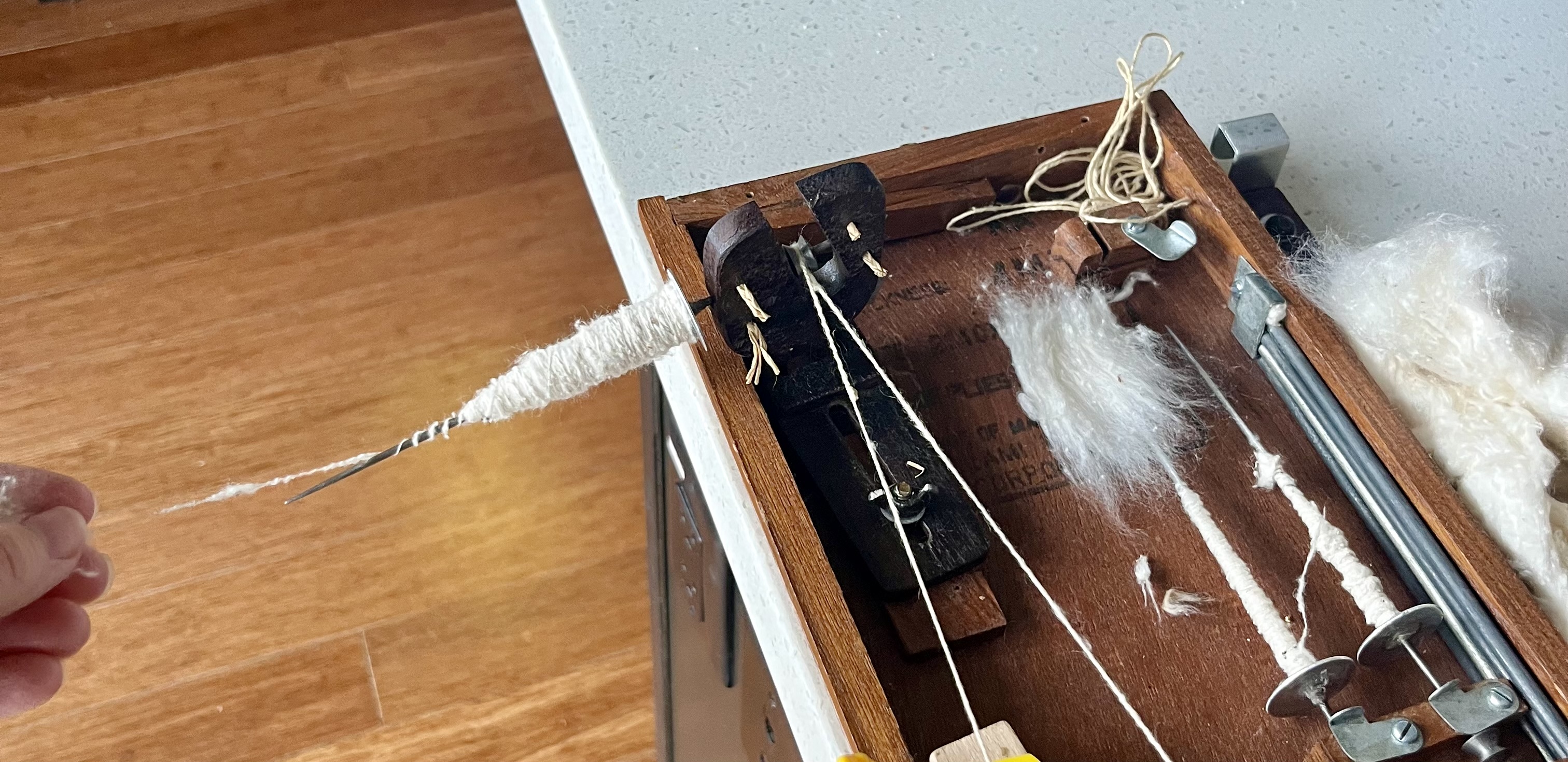 Then I bought my charkha and decided to give spinning the bourette silk another try, and it was a match made in heaven. The charka spins fast enough to lock the short fibers together. The horizontal draft direction minimizes the tension on the fibers before there is twist, meaning the slippery silk is less likely to slide apart and break as your spinning. And the long draw pulls beautifully from the roving after a small bit of fluffing. The two work perfectly together and it is so much fun to spin! I am currently chain plying using a drop spindle and trying to get 750 yards of finished yarn to weave with (a future post). I will keep you updated, but I still have at least 300 yards to go.
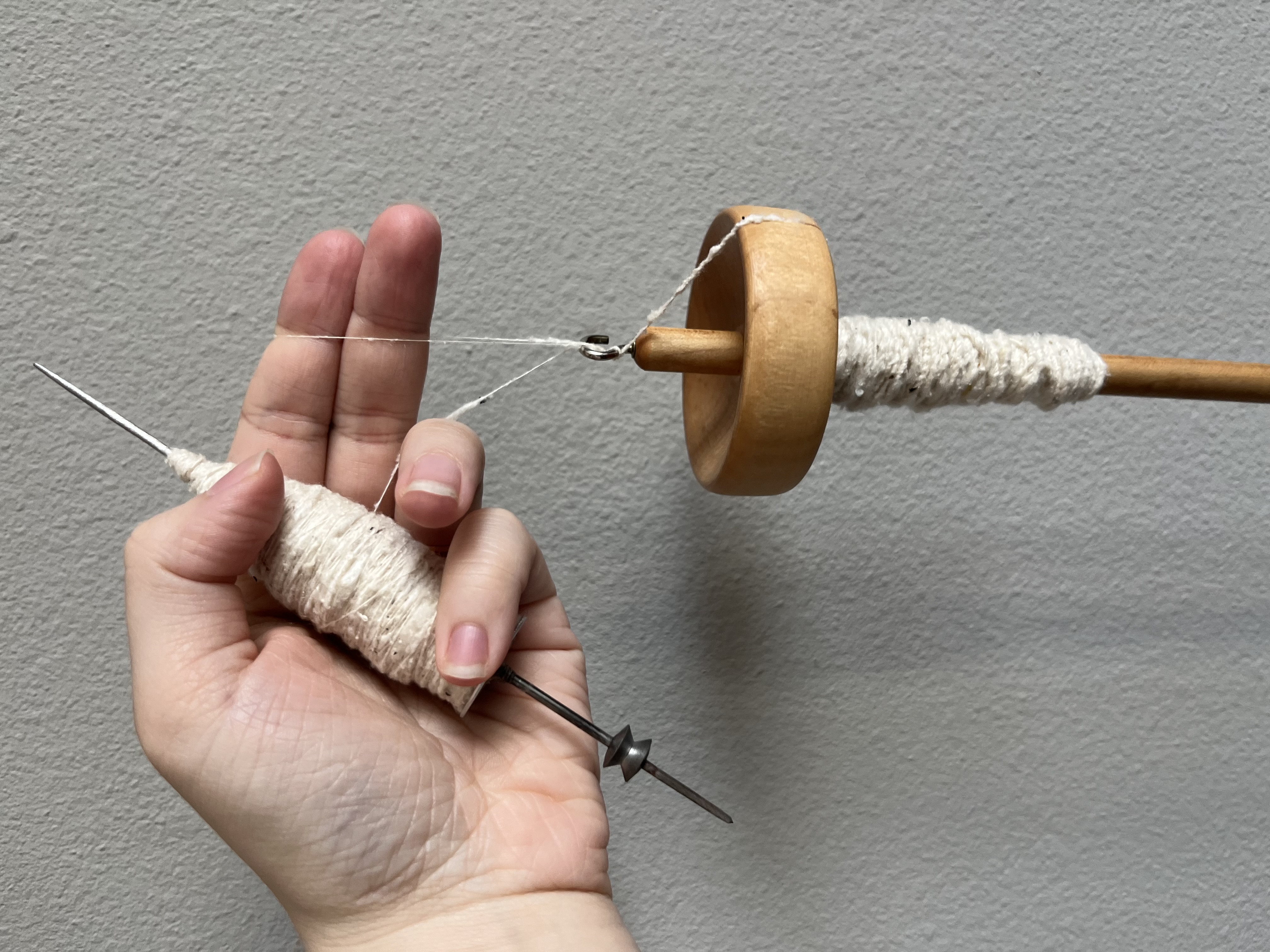
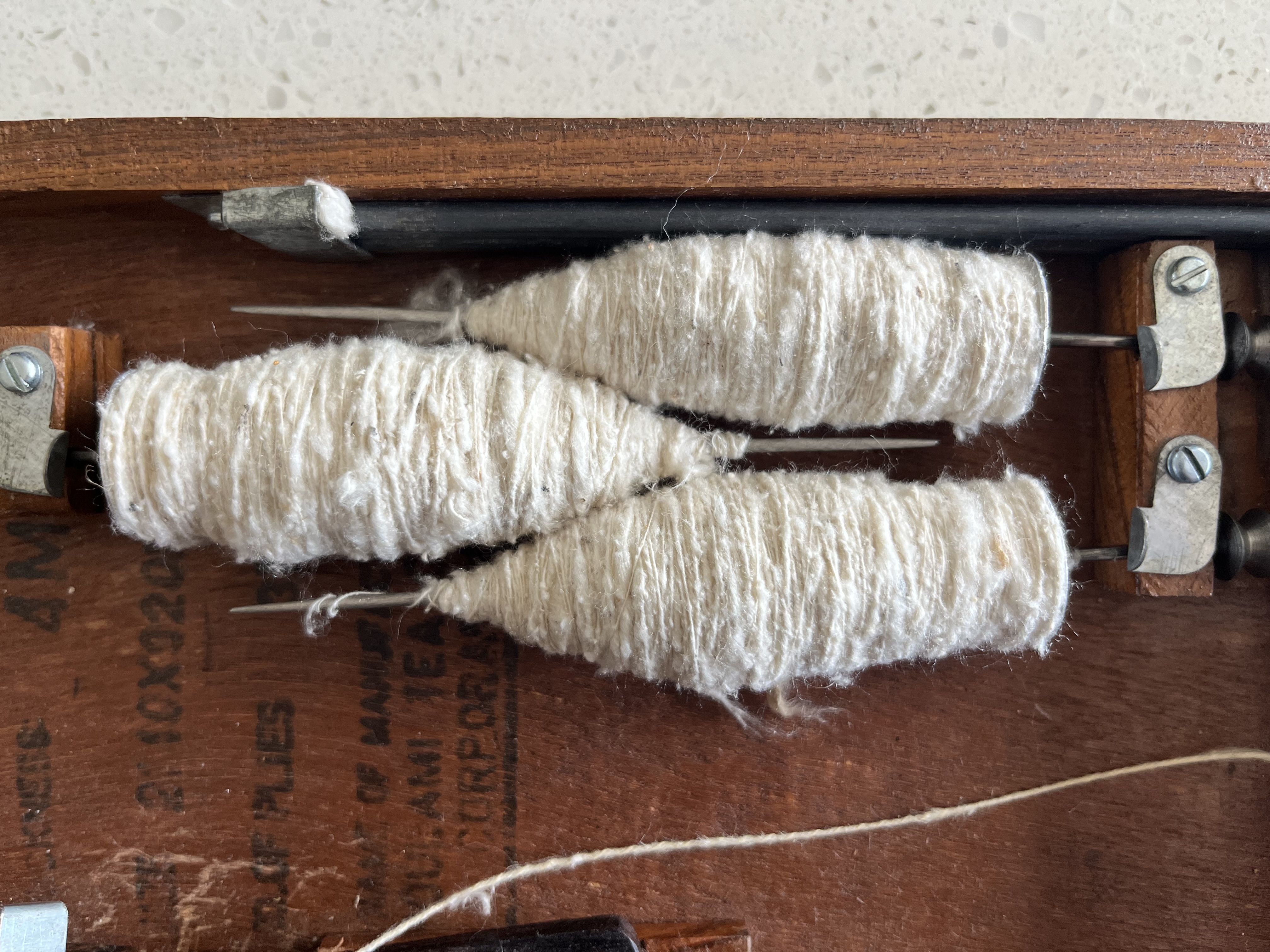
Spinning silk on a Charkha
Photos